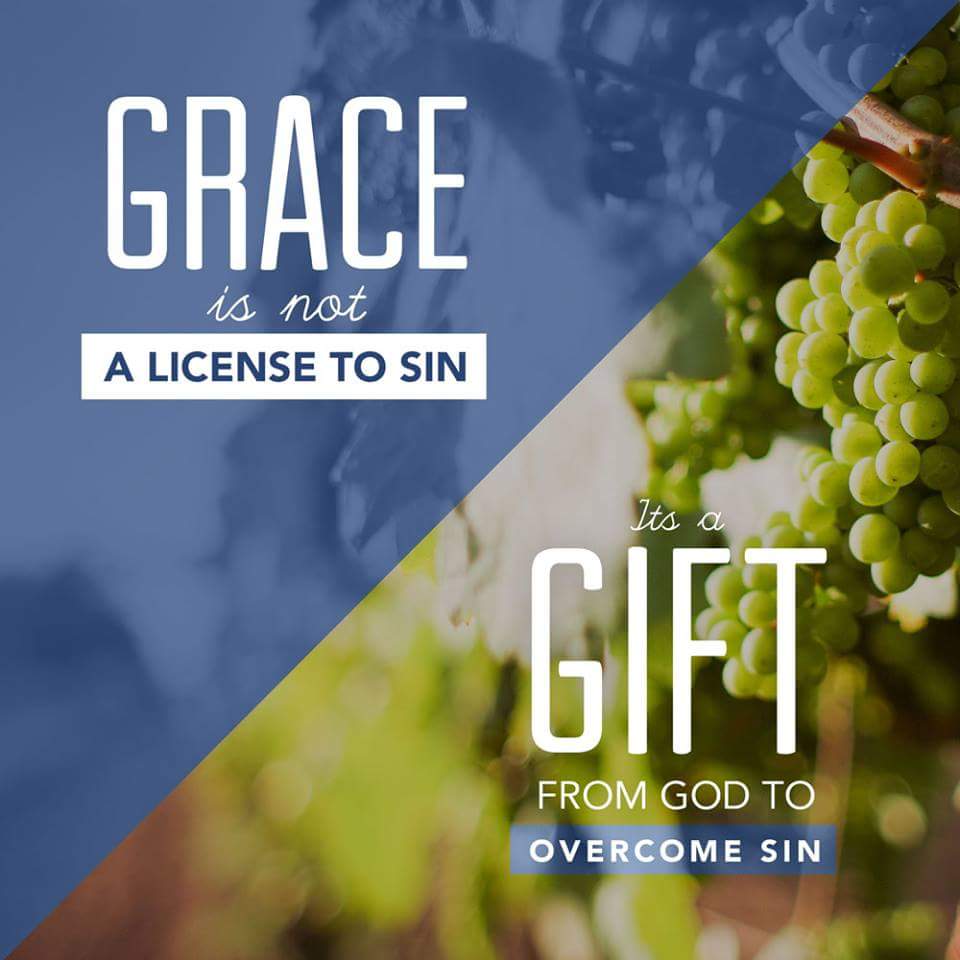
[Author’s Note: In this article, please bear with the different spellings of the word ‘Licence’ on the graphics. This is because the people who made those graphics spell it differently; the correct use is explained at the end of this post]*
This is a piece I have wanted to write for quite some time, and I have had to crystallise my thinking on this over a period of months. I hope it was worth it!
I am quite free in declaring my total reliance on God’s Grace under which I live my life. Not that I bring it up as a conversation starter, of course, because that makes people’s eyes glaze over. However, many conversations in a faith context do eventually get round to the subject of Law vs. Grace.
It’s usual that someone will claim that a certain hobby/habit/preference/attitude/word, whatever, is ‘wrong’ or ‘sinful’, ‘because it says so in the Bible’, or because they personally don’t like it (in other words, rules made by men (Mt15:9)). Or, to put this another way, even though they are ‘saved’, there are still certain Rules they must follow (and of course everyone else must follow them too!) – and for some people, not following those rules can (they believe) mean that they can ‘lose their salvation’.
I, however, believe that Grace covers everything. In short, I claim that, for a believer, everything is permissible, but not everything is beneficial (1Cor6:12; 1Cor10:23) . All sin past, present and future, has been forgiven (Is 43:25; Heb 8:12), and I am free to get on with living life in the Spirit without worrying about whether something is sinful or not, because I trust fully in the Spirit of Grace – in Whom I live my life – to steer me away from things that are harmful. Anything goes, essentially, but I don’t go everywhere, if you see what I mean.
It’s not surprising, then, that one of the first claims levelled at a Grace-living person like me is that this is essentially a ‘Licence to Sin’. I get that. Because I am free to do anything I choose, I am naturally going to go off and do loads of ‘sinful’ things, simply because I can.
And nothing could be further from the truth. Nor is it true for others who have been set free by the Spirit of Grace. I read on a Facebook group the other day about the ‘relentless, hard struggle against sin’. But, you know what, Jesus promised ‘rest’ (Mt11:28). And the key to that rest is this: to rest in His finished work, and to live your life of freedom in the Spirit. Being free from sin is not only having the desire to sin be removed, it is also – and especially – being free from the constant worry about whether something is sin or not. Just live life and trust the Spirit to keep you away from that which is harmful! As Paul says, ‘consider yourselves dead to sin, but alive to God in Christ Jesus’ (Rom 6:11). This isn’t as a Law or a Rule, it’s the natural position of the person who walks in Grace. The whole idea of Life in the Spirit is expounded in St. Paul’s letter to the Romans, and if it is read with the Grace filters in place**, it all stands out so clearly. The problem with Romans, as with most/all other Scriptures, is that for centuries people have read them with their legalism filters in place, to find rules to live by and to impose on others. But Paul, as the Apostle of Grace, can also be read by those looking for Grace to live by.
Having just declared in the preceding verse that ” …[we] are not under Law, but under Grace”, Paul writes in Romans 6:15, “What then? Shall we sin because we are not under the law but under grace?” And this is exactly what the critics of living under Grace ask! Are you going to go ahead and sin because we are under Grace and not Law? And we, along with Paul, answer ‘No! By no means!’ But of course, and especially as Paul subsequently uses the example/illustration of slavery, critics will go on to say that obedience is key, but that’s not what Paul is saying here. He is directly answering those people who would accuse those living under Grace of having a Licence to Sin and he’s saying: NO!! It’s NOT a Licence to sin!
And the reason for that is because we are new creations!
Those in Christ are new creations; the old has gone, the new is come! (2Cor5:17) Those who look for rules to follow and conditions to impose in the Romans passages are missing the point. These people say you have to follow the Rules as written here. But the awesome, magnificent, amazing truth is this: It’s already been done! It’s a “fait accompli”! We are alreadynew creations in Christ. The whole flavour of Paul’s writings is that these things are already in position. He doesn’t say that ‘one day, we will be free of sin’; ‘one day, we will be new creations’ or anything of the sort! No, it’s all been done for us by Jesus. We died with Him; we are also raised up with Him (Rom 6:8). In Colossians 2:9-15, Paul says this:
“For in Christ all the fullness of the Deity lives in bodily form, and in Christ you have been brought to fullness. He is the head over every power and authority. In him you were also circumcised with a circumcision not performed by human hands. Your whole self ruled by the flesh was put off [killed, amputated] when you were circumcised by Christ, having been buried with him in baptism, in which you were also raised with him through your faith in the working of God, who raised him from the dead.
“When you were dead in your sins and in the uncircumcision of your flesh, God made you alive with Christ. He forgave us all our sins, having canceled the charge of our legal indebtedness, which stood against us and condemned us; he has taken it away, nailing it to the cross. And having disarmed the powers and authorities, he made a public spectacle of them, triumphing over them by the cross.”
This is an example of how these ideas are presented as already having been accomplished.How then can we not realise that these things are already true of us? I know I don’t believe that “the Bible clearly says…” all that much at all, but surely if these things are true, as written by Paul, then they are completely liberating, completely freeing? It’s already been done!
When Paul says in Romans 6:14, “For sin shall no longer be your master, because you are not under the law, but under grace”, he’s not stating a Rule; he is making a statement of the true, actual nature of the believer. Someone might point out that ‘…the human heart is deceitful above all things’ (Jer 17:9) but for those under the New Covenant, this is no problem. I have a new heart; a new motivation for living my life. And so do you. “A new heart will I place in them” (Ezek 36:26). This is the New Creation; the new nature. “Therefore, if anyone is in Christ, he is a new creation; the old has passed away, and see, the new has come!” (2Cor 5:17). In fact, the entire chapter of Romans 6 is about Paul handling various objections to people living under Grace, probably objections of ‘religious’ types who want to put people under Law once more. Or at least he’s playing ‘Devil’s Advocate’ while building his argument moving from the ‘religious’ and legalistic point of view (as he himself used to be a part of and indeed endorsed, before meeting Jesus) and progressing into the concept of Life in the Spirit through Grace.
Bear in mind also that Paul says in his letter to Titus, “For the grace of God has appeared that offers salvation to all people. It teaches us to say “No” to ungodliness and worldly passions, and to live self-controlled, upright and godly lives in this present age…” (Titus 2:11-12). Did you see that? It is Grace itself that teaches us to say ‘No’; it is not Law, Rules, our flesh or anything else like that. Those efforts in our own strength are always doomed to failure. This is why Romans 6:14 is so true; it’s that sin shall not be our master because we are not under the rule of the Law, but under that of Grace instead, and it’s Grace that teaches us to say no to sin, not Law.
I also think that those who say that ‘Grace is a Licence to Sin’ don’t understand Grace. We have already seen above that it’s Grace that teaches us to say ‘No’ to sin. Because we are free to choose – we are no longer slaves to sin (Rom 6:6) – we now have the choice; we can choose our way, or we can choose God’s way. And if that means saying ‘No’ so sin, then Grace helps us learn that. Note that it is a learning curve. I’m not saying it’s trial and error that we use to find out what is sin and what is not, but living in the Spirit, following His prompts, doing what we see Father doing, effectively keeps us away from the desire to sin. That’s how Grace teaches us to say ‘No’ to it. The Spirit teaches us all things, including this!
But the other thing about sin is that we get ‘entangled’ by it (Heb 12:1). How, you might ask, can we be entangled by it when I have just said that we are free from it? Well, sin ‘so easily entangles’ us when we are focused on sin; ironically, when we are focused on the task of not sinning! If we are constantly checking to see if we are ‘sinning’ (or, worse, if others are ‘sinning’) then we are focused on the wrong thing, and we have no room in our lives for the freedom of the children of God, which is our birthright. This is also the trap into which the ‘sin police’ fall – those who point out sin in others. Part of being free of sin is that we don’t need to think about it any more – ours, or anyone else’s. We don’t need to worry about it; we just get on with living in the Spirit. And for those ‘sin-police’ who feel it is their duty to point out sin in others, just think: wouldn’t it be amazing, light and free to be rid of that burden? This is not your job! Why bear that burden any longer? Be free from it! Live in the light and freedom of the salvation that Jesus has given you, free of charge and free of obligation!
Granted, some may ‘point out’ Scriptures that appear to contradict these truths, but in reply I would say that these Scriptures I have used here today are true for me,in my experience. All I am doing by quoting Paul is to say, ‘Look, I have found this to be true in my own life, and hey look!, Paul found it to be true for him too!’ I am not finding a Scripture to ‘proof-text’ my ideas, I am saying that this is true for me and Paul found it true for himself too, and he wrote about it. I personally am free of entangling sin. Sure, I ‘sin’ occasionally, and this too is covered by Jesus (1Jn2:1). But my motivation, flowing from my new heart and new life in Christ, is to live life in the Spirit. Galatians 5:16 says that ‘If you walk by the Spirit, you will not gratify the desires of the flesh’. This is what it actually says! Why is it so hard for some people to appreciate that this is actually true? In denying this truth, and the other truths I have expressed here, surely these people are denying the very Scriptures they base their arguments on?
‘But surely’, some may say, ‘you can’t walk in the Spirit all the time?’ To this, I would reply, ‘Why not? Yes, of course you can!’ It’s really easy; you just live your life and trust God to work the Life of the Spirit out in your life as you go about your everyday business. It really is effortless; His yoke is indeed easy and His burden is light (Mt11:29-30). This is why it is often referred to as ‘working from a position of rest’. I rest secure in my Life in the Spirit; nothing and no-one can take it from me, including myself.
As we have seen, many Christians don’t understand this Grace [undeserved acceptance], and they think that this undeserved, unconditional sort of acceptance becomes a ‘licence to sin’. If there is no ‘penalty’ for wrongdoing, they claim, or no Rules to follow, then basically people who believe in Grace can just do what they want and get away with it. Interestingly, in some ways this is true; we can indeed ‘do what we want’ (1Cor10:23). But the consequences of sin are that our lives take damage; we get into destructive habits, thought patterns, behaviour structures and attitudes that are not good for us. So yes, sin has its consequences. And for that reason, not everything is beneficial (1Cor10:23).
There is a certain irony that following the Law is actually, in my view, the biggest ‘sin’ of all, because it is based in our pride in our own self’s ability to follow the Rules. And even then it is pointless, except maybe for making us feel good about ourselves and how ‘well’ we are doing, because no-one will be declared righteous by following the Law. (Rom 3:20) No-one. That’s quite clear to me.
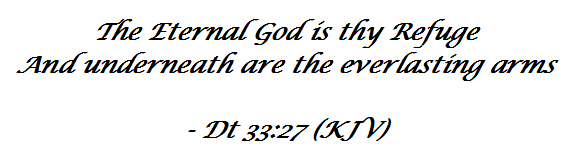
We’ve seen the Scripture that says ‘Everything is permissible, but not everything is beneficial’ (1Cor6:12) but, well, how are you supposed to know the difference? And I think that even as God’s children, we do not grow as people unless we push the boundaries, like teenagers do. And sure, things are going to hurt us when we get things wrong. But God is there all the time. He’s a much more laid-back parent than evangelicalism gives Him credit for. Whatever happened to ‘underneath are the everlasting arms’? (Deut 33:27) What part of God’s love for us don’t they trust? My own answer is that it’s perfectly acceptable for us to push the boundaries; we are safe as Christians, and to be honest, what’s the worst that can happen? We suffer, we die; but we do that anyway. The very worst thing that could ever happen to me (Job 3:25) has already happened to me, and I am still here rejoicing and walking with the Lord. The only way we find out what is beneficial and what is harmful (or, if you like what is not sin and what is sin respectively) is to push the boundaries. And if God’s really not happy with something we’d like to ‘try’, then He’s perfectly capable of warning us off. And not, I hasten to add, by some set of Rules ripped out of context from the Bible, but as a conversation just like a parent with a child. This is what freedom looks like, and it’s why the controlling priests of evangelicalism don’t like it – because it puts an uncontrollable God back in command. God is perfectly capable of catching us and raising us up again when we fall.
This is not a ‘licence to sin’; it’s more a licence to learn.
Also remember – and this is key – that Jesus Himself is the personification of Grace. In some inexplicable way, being under Grace and being taught by Grace is also being under Jesus, and being taught by Him. Remember John 1:17 – “For the Law was given through Moses; Grace and Truth came through Jesus Christ”.
And I would also say that God is greater than all the ‘bad’ stuff we can do; all is forgiven, God keeps us safe, even should the ‘worst’ happen. This is pretty radical I know but it’s where I am at the moment. Once again, fear is not something that should exist in a Christian’s life, because perfect love drives out all fear (1John 4:18). And when people speak to us of ‘playing with fire’, ‘slippery slope’ and ‘dangerous ground’, they are pandering to fear, not Grace.
There’s a lot more on this subject here in one of my previous posts. I recommend you go and take a look; it’ll be well worth it!
And so, go ahead and LIVE in your freedom. Use the word ‘Freedom’ in my site’s search box to find other articles that I have written on this subject; you will find that the word figures very prominently in my writings. Freedom from sin is not a Licence to Sin. It doesn’t need to be; in fact it’s quite the opposite. Morality and Rules are the low road; Life in the Spirit under Grace is the high road.
God is for you, not against you (Rom 8:31). If what you are hearing, whether from your mind or from a preacher or other Law-based person, makes you feel otherwise, ignore it until you know that God loves you and His Grace empowers you to live the life He wants you to.
This is freedom.
This is your freedom.
Grab this with both hands and your teeth as well!
Take it and run with it!
Let me leave you with a quote from Mike Rough:
“If morality is your way of living, you are living way beneath your privileges. Living by love in the power of the Spirit is true living and there are no rules–there are none needed. The one who lives by love will live a life like Jesus lived which is so far above living by rules, the difference is like night and day!”
Can I also point out to you this excellent article by Paul Ellis, on the same subject. His writing is much clearer than mine 😉
*In ‘English’ English, as written in Britain and most other places where English is spoken, ‘Licence’ is the noun and ‘License’ is the verb (although ‘Licence’ is an acceptable variant of the verb spelling). It’s similar to ‘advise’ and ‘advice’, and ‘practice’ and ‘practise’. So, I have a Pilot’s Licence (noun), which means the CAA have licensed (verb) me to fly an aeroplane.
In the USA, however, the spelling ‘License’ is used for both noun and verb, and the spelling ‘Licence’ does not exist.
**Grace filters: That is, if you read it with the assumption in mind that it’s about Grace, in other words, you are looking for Grace in the text. Hope that makes sense. This is not dishonest reading; it’s something we all do all the time. All our Scripture reading takes place with various filters in place; legalists will look for Rules, people who believe in Hell will interpret the ‘hell’ passages with that assumption in place, nobody lets the Old Testament tell them that bacon sandwiches are unclean, and so on. So long as we realise that we are always looking through filters, we will know that our perceptions are going to be coloured by them. And that’s fine as long as we are aware of that fact.
I love the wisdom of Jeff Turner (pictured above), and I have shared many of his writings on my blog before.
In this piece, Jeff talks about how we feel when we try to get across the message of Grace, into an environment where our listeners have only ever known the shackles and straitjackets of hard Religion. And then he gives some wise advice on how to deal with the way our message is received.
I need say no more. Over to you, Jeff:
“For those of you who have embarked upon the journey of thinking for yourself, asking difficult theological and philosophical questions, and as a result have experienced backlash and opposition, may I make a suggestion? Do not expect for people to be immediately receptive and understanding. Do not expect for them to be as enthusiastic about the whole thing as you are. Don’t expect them to thank you for opening their eyes, or rescuing them from poisonous doctrine. Don’t expect for a single argument to change their minds and hearts, when it likely took you years to get to where you are.
“I know that it’s upsetting when people don’t receive what you’re saying or thinking, but you should not place the burden of needing to be a perfect responder on them in the first place. When you decide to stop seeing people as being obligated to support you, their lack of support stops hurting so bad, and you can get on with the business of growing. I see so many people who start on this journey and then get sucked into the black hole of anger and resentment towards those who aren’t all that pleased with where they’re going and what they’re saying. Their speech goes from that of a child thrilled by the things they’re discovering, to that of an angry teenager.
“Look, you have to walk your own path, and you have to let others walk theirs. No one is obligated to applaud you for your bravery, or even to respect your beliefs. Should they? Yes, sure. But are they required to? No, and you shouldn’t expect them to. Follow truth where it leads you, and don’t get hung up and hampered by those who disagree. They are not your enemies, and you are not theirs. If they see you as one, let that be their problem, and one you allow them the space to have.
“One thing I’ve learned over the course of my faith journey is that the fewer expectations I place on others, the better. I know that respect *must be earned, and it’s the only sort I want anyways. I don’t want you to respect my beliefs because you have to. I want you to respect me because of how I handle myself, and then possibly consider the validity of my beliefs because I’m able to present them rationally and articulately. If you choose to do otherwise, well, it’s no skin off my back, and you exercised your autonomy. Well done. I am not going to allow my entire being to form around the opposition of others, though.
“Seriously. I daily see people talk endlessly about their detractors, and how triggered they are by their…detractions. You are not owed respect. Don’t act like you are. Journey your journey, and when others disrespect that journey, listen to their criticisms, and then keep on moving forward.
“You will never grow up if you embrace a childish mindset as though it were a virtue.
“Peace!”
Excellent. Link to the original Facebook post is here.
This article is the sixth in my series about the Stages of Spiritual Growth, and it describes Fowler’s Stage 4, which he calls the ‘Individuative – Reflective’ stage, but which can also in some cases be thought of as ‘The Wall’, or the ‘Dark Night of the Soul’. I’m sorry I’ve taken so long to get it published, but I wanted to get it right.
To set the scene, I will begin by quoting an article of mine from four years ago, ‘The Dark Night of the Soul‘:
“Sometimes a believer has to go through a spiritual wilderness, which may or may not include a ‘Dark Night of the Soul’, as described by St. John of the Cross. In those times, God feels distant, Church feels irrelevant and you wonder what your faith was all about in the first place.
“Well-meaning people suggest that you ‘go back to God’, repent, change your way of thinking, whatever. But what I would say, having been through fifteen years of this Wilderness experience, is that what they don’t understand is that actually God has His hand on you all along. There is no need to feel guilty, no need to feel lost, no need to feel ‘wrong’. God is using the time to sort out your feelings, your theology, your priorities, your ideas, your preconceptions and your motives.
“For you, it may last fifteen years, or it may last fifteen days. It doesn’t always feel good over that time. The thing is that God still has His hand on you and is using that time to mould you into the person He wants you to be. In some ways He has His hand on you more than ever, if that’s possible.
“Don’t be distressed that He takes you out of your familiar surroundings, such as a Church, a city or a relationship. Sometimes He has to take us out of the familiar surroundings so that we re-evaluate without distraction or preconception. Be encouraged; the next stage of your development as a believer is happening. You will emerge, sooner or later, but all in His time, into a new era of blessedness because of what seems like a real ordeal at the time. But never, ever forget that He has hold of your hand, even if you don’t feel it, and He will never let go of you no matter how it feels at the time.
“For those believers who have experienced this, you may well notice others going through a similar process, and indeed it is a process, and recognise the signs.
“If you have not been through this process, let me tell you that it will look from the outside as if your brother (and here I include sisters, but let’s keep it simple) has lost interest in the ‘things of God’; perhaps he comes up with some radical ideas about God and how He relates to others and himself. He may well especially have ideas that go against the orthodoxy of his previous belief structure. Maybe his behaviour will not reflect accurately what you believe should be ‘acceptable’ Christian behaviour. This is part of the process. It is those very preconceptions of belief and behaviour that are being challenged and changed, usually by sovereign Divine interventions, in apparent defiance of his previously professed faith – or perhaps he does not profess faith, so profound are the changes in action in the believer.
“Should we be surprised? For a believer who has never undergone this process, then yes; they may well be surprised. How can a ‘supposed’ Christian profess to believe in these things; how can he behave in these ways?
“But for those who understand, instead of passing judgement on the believer, they continue to believe in him. Believe in him as a person, believe in him as a brother and believe in him as a precious Child of God. For as in Romans 14:4, ‘Who are you to judge someone else’s servant?’. Judge him if you will, but do not expect that judgement to have any visible effect. Because, by the time the believer has come out of the other side of the process, the judgement of others will not matter nearly as much. For him, the second half of Romans 14:4 will have new meaning: “To his own master he stands or falls. And he will stand, for the Lord is able to make him stand.”
“Remember that the believer is undergoing a deep transformational process. What comes out of the other side may well have a passing resemblance to the person the believer was before, at least in a spiritual sense, but remember that this is God who is doing the transforming. We believe that the Spirit is transforming every believer, daily, to conform to the likeness of Christ. So why, then, are we surprised when that transformation occurs, and why are we surprised at its results? Transformation means by its very nature that changes will occur. That’s what transformation means. So in that sense, no, we should not be surprised that the believer comes out a different person from what he was at the start.
“And the amazing thing is that God is far more real to that believer after the process than He was before. God has not changed; His ways have not, but the believer has changed; how can things ever be the same again?
“And as for missing out on what God has been doing for all that time, don’t worry. God is still the same as He was before. He still does things in surprising, novel and delightful ways. It is amazing how quickly the believer comes back up to speed and hits the ground running. Things are kind-of as they were before, but now the believer has a new perspective. Wow, this is pretty deep stuff, but it’s real.
“So, don’t despair if you, or someone you love, is undergoing something like this. It’s not backsliding, falling away, or becoming apostate. When you first believed, did you not trust God with the whole of the rest of your life? Do you really think that He’s going to reject you because all of a sudden you no longer believe exactly what you’ve been told to believe by men? Do you really think that your salvation rests on such a shaky foundation as the weakness and failings of human flesh? By no means can it ever rest on that, otherwise Jesus would not have had to die for us. No, this is transformation, and it’s exactly how God has planned it to happen for that person.
“Finally, I want to thank those people who have believed in me during my time in the wilderness, who have never stopped believing in me and loving me. Thank you all!”
That’s my personal account of what it feels like, and it is of course going to be different for everyone.
But the fact remains that most believers, or at least those who think honestly about their faith, will come to a point in their spiritual walk where they feel that it’s ‘not working’, there’s ‘something more’, there are deeper depths to be plumbed in the things of God. Here’s theologian Pete Enns:
“You get the feeling from the Bible that being unsettled is almost a normal part of the process. Not that we should go looking for it— it will find us soon enough— but struggling in some way seems like something we should expect on our own spiritual journeys. True struggling in faith is a stretching experience, and without it, you don’t mature in your faith. You either remain an infant or get cocky. Feeling dis-ease and challenged in faith may be God pushing us out of our own safety zone, where we rest on our own ideas about God and confuse those ideas with the real thing. God may be pushing us to experience him more fully, with us kicking and screaming all the way if need be. Feeling unsettled may be God telling us lovingly, but still in his typical attention-getting manner, it’s time to grow.” (1)
To me, this is the most fascinating of the Stages of Faith/Stages of Spiritual Growth. This article describes the Stage of questioning; the Stage of deconstruction, and the Stage which, I personally feel, brings the largest single jump forwards in a person’s faith life – if indeed they ‘make it’ through*. Don’t worry about my terminology here; the very fact that you are reading this indicates that you are finding out what this Stage is all about and what it might mean for you, and hopefully increase the likelihood that you and your faith – even if you don’t consider you have one at the moment – will benefit greatly from knowing what is actually happening**. It is the period of huge change, usually resulting in huge positive growth, and yet to those looking on from the outside it often appears as if the believer has ‘fallen away’ from the faith, or is at best ‘backsliding’. This is why I find it so fascinating.
So this is what Fowler called Stage 4 – the ‘Individuative – Reflective’ Phase.
It’s a time of great change; of learning to stand on our own two feet, in a faith sense. It’s the ‘growing-up’ Stage; the Stage of the spiritual adolescent.
For a believer***, it is the Phase that presents the greatest challenge to his or her faith; although of course each Stage has its own challenges, this is the tough one. This is the Stage where the believer begins to come to terms with the awkward questions that don’t quite make sense. It is a time of change, almost always a large change, which has been likened to a caterpillar going into the chrysalis phase. It looks as if nothing is going on, or even that the caterpillar has died. But before long, the former caterpillar emerges from the chrysalis as a completely new creature. This is what I feel happened to me when I went through what I called my ‘Dark Night of the Soul’, as I described at the beginning of this piece.
Some other commentators (for instance, Pete Scazzero) refer to this Stage as ‘The Wall’. It can indeed feel as if your faith has hit a ‘Wall’ and there’s no way forward in terms of growth. Partially for this reason, it can be the Stage that many Christians in fact avoid or simply never make it through – although that’s not really what I mean. You see, as we saw in the previous article in this series, it can be terrifying for someone to confront the disturbing questions and doubts that threaten what they perceive as their spiritual security. Remember that for some people, their beliefs may be, apparently inextricably, mixed with instilled fears about those who ‘fall away’ becoming liable to ending up in ‘hell fire’. By a combination of their own thinking, ‘warnings’ and other teachings from authority (usually a combination of leadership teachings on, and their own personal interpretations of, the Bible), a person has a strongly-held and yet tacit (that is, ‘understood or implied without being stated’) belief structure that, consciously or unconsciously, they realise will not stand up to intense critical scrutiny such as would be posed by such doubts and questions. The doubts and questions can come from any source, but they very often stem from inconsistencies in doctrinal statements, contradictions in authoritative statements (whether from leadership or in the Bible), modern discoveries in archaeology and/or science, or reading material written by people who themselves either have similar questions, or who have passed through that questioning and into further maturity in their faith. Maybe the believer gets the feeling that their church leadership are not telling them everything they know, or that things are being withheld. Actually, that’s not usually the case; more often than not, and assuming a loving, non-controlling leadership, it is far more likely that the believer is actually reaching beyond and above the experience and knowledge of their leadership. Really mature leadership will see this and hopefully use their wisdom to encourage the believer onwards and upwards. But some will feel threatened by it, by a perceived loss of control, and that’s where the danger lies for the growing believer. The danger, that is, of not growing any further due to them feeling that they have to do as they are advised/told by leadership who do not understand the transformation that is taking place, as in my opening quotation. This is usually not a deliberate obstruction of the believer’s growth, but it probably stems from a genuine care that the believer does not go ‘astray’, but, as we have seen, this is not really what is happening.
In short, there is a tacit realisation in the believer that there is ‘something more’. My friend David Matthew has expressed this very well in his book ‘A Poke in the Faith’, an eBook version of which is downloadable for free from his website. In his book, David likens the structure of a person’s faith to being like the game of Jenga. In this game, you have a tower made of stacked, interlocking wooden blocks, and players remove said blocks from the tower one by one with the aim of being the last person to remove a block ‘safely’ before the whole lot comes crashing down. So, how ‘safe’ is it to challenge one’s own beliefs, removing one block at a time, while not wanting the whole tower of your faith to come crashing down? How vital is each belief or doctrine – the virgin birth of Christ, the inerrancy/inspiration of Scripture, a belief in hell, the deity of Jesus – to the entire structure of one’s faith? What will happen to friendships with people in the Church if you change your belief structures? In David’s book, he argues that as long as a person’s Relationship with Jesus Christ is real and living, then it is perfectly safe to ask of God all these awkward questions. Indeed, like me, David is a gentle man with a real pastor’s heart, who has taken these questions head-on and has come through the other side with his faith intact, and wants to help others who are going through similar questions. Here’s a quote from the book:
“My commitment to Jesus Christ, to his people and to the Scriptures as God’s Word remains undiminished. But I have undergone some changes in my views on certain aspects of the faith — including some of the ones listed above. I want to come clean and say that grappling with these issues hasn’t always been easy. In fact, they have caused me quite a few spiritual wobbles at times. I have come out the other side of those wobbles and find that my faith is now stronger and fresher than it has ever been since I became a Christian over sixty years ago. And my desire, in writing this book, is to help you reach a similar happy place.
Your choices
“That, then, is where I stand. My intention in what follows is two-fold. First, I want to introduce you to some of the new ideas that are challenging traditional ways of viewing the Christian faith in general and the Bible in particular. I will do this as one who believes these ideas should be taken seriously. And second, I want to convince you that you can embrace some or all of them without losing your faith. Indeed, I want to strengthen you in your faith. But I will be asking some searching questions about issues that you may never have questioned, and you need to be prepared for that. Which leaves you now with two choices. You can say, ‘I don’t think I’m ready to have my boat rocked, thank you. I’m happy living out my Christian faith as it currently is, in the company of good friends in my church, and I’ve no wish to risk anything changing that.’
“Okay. Shut the book now, and God bless you. But if you do that, I suspect it won’t be long before some of these issues sneak up on you from other, less sympathetic, quarters, and you can only keep your head stuck in the sand for so long. Might it not be better to face them in my company, as someone who is rooting for you and your faith, rather than risk being shot down in flames by some bitter ex-Christian? That’s why I’d recommend the second choice, which is for you to say, ‘Okay, I know some big issues have been brewing in the background. It worries me, but I’m not one to shut my eyes and pretend it’s not happening. So here goes: I’ll stick with the book and hope it does me some good!’
“I think it will”. (2)
I feel that this book can be a most helpful read for believers in Stage 3 who have realised that they have ‘difficult’ questions, and who may be approaching their own personal ‘Stage 4’. It would also be excellent for those who feel they are actually passing through their own Stage 4, or maybe consolidating the thoughts and ideas they had during that time.
In fact I would even go so far as to recommend it as a ‘manual’ for people going through the ‘Dark Night’ or other Stage 4 experience; people who are trying to come to terms with the huge, and usually frightening, changes to their belief structures.
It will come as no surprise, then, for me to say that I consider David’s book to be one of the most important books written recently that speaks into this little-known area of Christian belief, and I am disappointed that no publisher has yet come forward to produce a paper version of it that I can read in the bath (it’s only available as an eBook). It’s a lot harder to read an eBook without dropping your Kindle in the bath water.
Right, let’s now examine what our old friends James Fowler and M. Scott Peck have to say about this Stage. Here’s what the chart says about it:
Fowler:
This is the tough stage, often begun in young adulthood, when people start seeing outside the box and realizing that there are other “boxes”. They begin to critically examine their beliefs on their own and often become disillusioned with their former faith. Ironically, the Stage 3 people usually think that Stage 4 people have become “backsliders” when in reality they have actually moved forward.
Fowler’s formal description of this Stage is as follows:
“The movement from Stage 3 to Stage 4 Individuative-Reflective faith is particularly critical for it is in this transition that the late adolescent or adult must begin to take seriously the burden of responsibility for his or her own commitments, lifestyle, beliefs and attitudes. Where genuine movement toward stage 4 is underway the person must face certain unavoidable tensions: individuality versus being defined by a group or group membership; subjectivity and the power of one’s strongly felt but unexamined feelings versus objectivity and the requirement of critical reflection; self-fulfillment or self-actualization as a primary concern versus service to and being for others; the question of being committed to the relative versus struggle with the possibility of an absolute.
“Stage 4 most appropriately takes form in young adulthood (but let us remember that many adults do not construct it and that for a significant group it emerges only in the mid-thirties or forties). This stage is marked by a double development. The self, previously sustained in its identity and faith compositions by an interpersonal circle of significant others, now claims an identity no longer defined by the composite of one’s roles or meanings to others. To sustain that new identity it composes a meaning frame conscious of its own boundaries and inner connections and aware of itself as a “world view.” Self (identity) and outlook (world view) are differentiated from those of others and become acknowledged factors in the reactions, interpretations and judgments one makes on the actions of the self and others. It expresses its intuitions of coherence in an ultimate environment in terms of an explicit system of meanings. Stage 4 typically translates symbols into conceptual meanings. This is a “demythologizing” stage. It is likely to attend minimally to unconscious factors influencing its judgments and behavior.
“Stage 4’s ascendant strength has to do with its capacity for critical reflection on identity (self) and outlook (ideology). Its dangers inhere in its strengths: an excessive confidence in the conscious mind and in critical thought and a kind of second narcissism in which the now clearly bounded, reflective self over assimilates “reality” and the perspectives of others into its own world view.” (3)
This formal description is perhaps better expressed in this passage by Margaret Placentra Johnston:
“According to Fowler, it is ideal that a person reach this stage in their early to mid-twenties, but as has already been discussed, it is evident that many adults never reach it. If it happens in the thirties or forties, Fowler says, it is much harder for the person to adapt.
“In Individuative-Reflective faith, what once was tacitly held becomes explicit. The faith the person never reflected about, and was not completely able to articulate how he arrived at it, becomes filled with both a freedom that he now CAN reflect on it, and the burden that he now feels he MUST examine. The responsibility of this can be frightening, and it seems religious groups are always trying to discourage people from making this examination (of course, because it threatens the viability of the institution if people start questioning!)
“Fowler’s Stage 4 faith requires that the person be willing to interrupt their reliance on external authority and relocate the source of authority within himself. Fowler calls this the formation of an “executive ego,” which is not a bad thing, like the other kind of ego. It just means the person is more able to govern himself without the need for rules from the outside. In Fowler’s Stage 4, meanings in stories are separate from the symbols themselves, so the stories are demythologized. (In losing the literal meaning of the religious symbols, people can – I think often! – at the same time lose ALL meaning of the symbol and that is how you wind up with so many atheists and agnostics at this stage.)
“Loss or demytholization of the symbols can result in grief and guilt in some cases, and the process can take up to seven years to complete. But in the place of the literal symbol, the person gains the ability to make comparisons and whatever meanings they retain are explicitly held (and thus more authentic in that they are personal.)
“The strengths of this stage lie in the capacity for critical reflection (and the willingness to face truths that may cause distancing from comfortable thought patterns and thus pain.) But a weakness of this stage is that the person may put excess confidence in the rational, conscious mind, thus ignoring unconscious forces that become more prominent in the next stage.” (4)
Peck:
Peck – who calls this phase Stage III – the ‘Skeptic-Individual’ Stage – says this:
Those who break out of the previous stage usually do so when they start seriously questioning things on their own. A lot of the time, this stage ends up being very non-religious and some people stay in it permanently.
Let’s hear from Johnston again: “According to Peck, people in the third stage of spiritual growth have the principles of goodness “engraved on their hearts.” Thus they no longer need the forms of society or a church to keep their behaviour in check. They are self-governing. Because they no longer need the services offered by a church, they begin to feel free to question the value of religion in their lives. They may at this point choose to reject religious belief. Even though they may describe themselves as atheist or agnostic, people in Stage III are actually more spiritually developed than most of those content to remain in Stage II. They are often deeply committed to social causes. They are active seekers of truth.” (5)
Richard Schwartz quotes Peck thus:
“STAGE III:
“Skeptic, Individual, questioner, including atheists, agnostics and those scientifically minded who demand a measurable, well researched and logical explanation. Although frequently “nonbelievers,” people in Stage III are generally more spiritually developed than many content to remain in Stage II. Although individualistic, they are not the least bit antisocial. To the contrary, they are often deeply involved in and committed to social causes. They make up their own minds about things and are no more likely to believe everything they read in the papers than to believe it is necessary for someone to acknowledge Jesus as Lord and Saviour (as opposed to Buddha or Mao or Socrates) in order to be saved. They make loving, intensely dedicated parents. As skeptics they are often scientists, and as such they are again highly submitted to principle. Indeed, what we call the ‘scientific method’ is a collection of conventions and procedures that have been designed to combat our extraordinary capacity to deceive ourselves in the interest of submission to something higher than our own immediate emotional or intellectual comfort–namely truth. Advanced Stage III men and women are active truth seekers.
“Despite being scientifically minded, in many cases even atheists, they are on a higher spiritual level than Stage II, being a required stage of growth to enter into Stage IV. The churches age old dilemma: how to bring people from Stage II to Stage IV, without allowing them to enter Stage III.” (6)
I know this is an awful lot of information to have to take on board, but I wanted to make it very clear what this Stage looks like, why it happens, and what the evidence is for its existence, because it so often either unknown or misunderstood.
But I also wanted to make it personal; applicable to me and you and people whom you meet.
Firstly, we have established in an earlier article that not everyone necessarily goes through these Stages. Spiritual growth is different for each individual, and some people have an entirely different way of maturing spiritually than to go through these Stages. However, I personally feel that I have gone through Stages in my spiritual walk, and so I am espousing these ideas to illustrate, with personal examples, what it can be like, from my own experience. We will look into the sequencing of the Stages later in the series. But for now, just know that many believers (and indeed non-believers) do go through these Stages.
So, we can summarise Stage 4/III (Fowler/Peck Stages) by saying that there comes a time in many believers’ lives when they start to question the belief structures that they have tacitly held, and possibly begin to deconstruct their old beliefs and to form their own beliefs.
This could take months, or it could take years. It depends on how much ‘baggage’ you need to lose from your previous Stages (most of this ‘baggage’ usually originates in Stage 3/II). For me, it took fifteen years.
The ability to question, deconstruct and reconstruct learned in Stage 4 are usually also carried forward into Stage 5; this ability is a good example of how the best and most useful parts of each Stage are carried forward into the next Stage. Which parts are so carried forward will be different from person to person, as each person will have generated different belief structures which they will need to modify individually, and different ways of coping with them. But we will look at Stage 5 in more detail next time.
If you feel you are at Stage 3, the ‘conventional’ Stage, and you feel there is more, maybe ask Jesus what He wants you to do next. If you are already in your ‘questioning’ Stage 4, then take heart. Others have trodden this path beore you. God is still with you and you are perfectly safe. If you are watching others whom you consider to have ‘backslidden’, please don’t judge them. God has them in His hands, and He will not let them go. They are perfectly safe. Remember that Jesus will carry on the good work to completion in them – but in His own time, and in His own way. You can trust Him.
Entering the Dark Night of the Soul – or indeed exiting it – cannot be rushed. You will not go through this before the right time. And you cannot rush coming out of it either. Read my testimony at the start of this article, and take encouragement. And, to use the most common phrase in the entire Bible – “Do not be afraid !”
Let’s take a look at this from another angle; another viewpoint. Here is a YouTube video of the aforementioned Pete Scazzero, with his wife Geri, talking about the Dark Night of the Soul/The Wall, and it is well worth watching. Pete is one of the few people I have heard talking about this Stage in the walk of Spiritual Growth, and he is pretty well-versed on it. Hint: As this was recorded in a large church service, maybe you might want to skip the housekeeping and preliminaries by fast-forwarding to about 4:30 in the video 😉 :
If you watch that video right through, you will notice that although Pete has a different set of names for the different Stages of Faith, still he is recognising that the Stages of Faith do exist, and he emphasises that the Wall is the tough one, but also the biggest growth phase of them all 🙂 The only thing I don’t agree with, in all that excellent talk, is this: when he says ‘Stay with God, don’t quit church; stay with Jesus…’ – sometimes the Church stuff is the problem and so you do, in those circumstances, need to quit church, as I did. (There are no rules or conditions for this Stage, and it’s going to be different – unique, in fact – for each of us). You might feel like you have given up on God; that you have ‘left Jesus behind’, but actually that doesn’t matter. The most important thing is that Jesus has not left you behind, no matter how much like that it may feel! And I think that another important point is, again, that the Wall/Dark Night/Stage 4, or whatever we call it, will be different – in fact, unique – for each of us, so there is no prescribed duration, frequency, content, requirement, or anything else involved. This is a time of setting-free, remember! I’m not even sure that everyone has to go through this Stage; I personally know people who have not had to shed baggage or religious preconceptions, and they may very well be ‘exempt’ from going through Stage 4. We just need to trust that God will bring each of us to it, and through it, in His own way, and in His own time. Remember it’s always going to look different for each individual.
Slight change of subject. Here’s a thought. Maybe the revival ‘breakthrough’ that Charismatic/Evangelical Christians pray for is already here. Maybe these people, like me, who have faced into the Dark Night and come through the other side, maybe we are the answer to those prayers. Maybe the breakthrough they need is to face into Stage 4/III themselves, and be honest with their questions. Maybe breakthrough isn’t possible without facing these questions, and the answer to their revival prayer is right there, staring them in the face. Maybe they need to cast aside their artificial security and learn to float free (see this article and this article for examples of what this looks like). If you feel that might be you, then, to trot out a well-used Christian phrase, I would suggest you ‘Let go, and let God’! I strongly feel that there is no way forward, for some people, other than to go through the Wall and out the other side into the broad, sunlit uplands of the true freedom of the Christian faith. He whom the Son sets free is free indeed (Jn 8:36).
Let me leave you with another excellent quotation from Pete Enns:
“Let go of fear. If I had to name the most common obstacle for Christians to a life of true trust in God, it would be fear— mainly the fear of being wrong about the Bible, which is often equated with being wrong about God. What we believe about God is very important to us, as it should be. Our faith defines who we are and helps us make sense of the world around us and the world that awaits us afterward. Our faith is the page upon which our personal narratives are written. To feel that our faith is threatened can easily turn to fear. But, judging from the long and varied history of thinking within Christianity, “being right” is elusive, and the Bible is never something we will actually master. The relentless and sinful human habit of creating God to look like ourselves, and thus distorting God, is also a constant problem. The choice we all need to make daily is whether we are willing to hold our narratives with an open hand and let God rewrite them when necessary. In the spiritual life, the opposite of fear is not courage, but trust.” (7)
If you are interested in reading more on this fascinating Stage, I have consulted many different sources during my work on this piece, the links to some of which I give below. In addition to the numbered references quoted and attributed to various authors in the References list below, then, you might find the books and articles linked to interesting and illuminating:
Bill Huxley on ‘Fowler’s Stages of Faith’. His observations on Stage 4 (what he calls Stage IV) are particularly interesting. I did not include them here because my present article is huge already. But his observations are well worth a look.
The chart of Fowler’s Stages of Faith and comparing them with Peck’s, referred to in previous articles.
A slideshow by Brian McLaren about the practicalities of leading churches with people at multiple stages. (They’re probably more common than you’d think!)
A link to the Kindle edition of the spiritual classic ‘The Dark Night of the Soul‘ by St. John of the Cross.
References quoted in this article:
Enns, Peter. The Bible Tells Me So: Why Defending Scripture Has Made Us Unable to Read It (p. 239). HarperCollins. Kindle Edition.
David Matthew. A Poke In The Faith (Kindle Locations 207-224). Leaf Publishing. Kindle Edition.
James W. Fowler, “Stages of Faith – the Psychology of Human Development and the Quest for Meaning” – Harper San Francisco, a division of HarperCollins Publishers, 1995, p. 182
Richard Schwartz, “The Stages of Spiritual Growth“, an abridged online version of the relevant sections of M. Scott Peck’s book ‘A Different Drum‘.
Enns, op. cit., pp. 239-240.
*I have heard it estimated that 60-80% of believers who hit the ‘Wall’ do not ‘make it’ through to the other side. They either stay where they are with their doubts and questions, push them down, or leave the faith altogether. However, I personally feel that the recent increase in awareness of the Stages of Spiritual Growth will bring this percentage down markedly, as people increasingly realise that this Stage – however it appears to them – is simply a normal part of Christian growth, and they embrace it and go through with it. This can only be a good thing. Actually I think that the Lord is making this more well-known in these days, so that more people not only understand it, but also they are able to help thers through it. For more on this topic of ‘The Wall’, follow up on Pete Scazzero’s course on ‘Emotionally Healthy Spirituality’ as mentioned in this piece, and also in that video above.
**The caveat I would re-emphasise, as in all these articles in this series, is that not everyone goes through the Stages of Spiritual Growth; you may not identify with any of this, and that’s fine. It’s not intended to explain or categorise your own, or anyone else’s, faith standpoint. Just be aware that these Stages do happen with many people, and, for some of those people, it can be a great relief to realise what is happening.
***For someone who is not a ‘person of faith’, for want of a better term, this Stage can also occur in their lives too since it can represent a major revision of one’s life-paradigm or worldview. Although I have written this article mainly for ‘believers’, those who are not ‘believers’ may also see some parallels with their own life journey and be encouraged by this article. That is my intention; encouragement of others is always my intention.
For Easter Sunday – today – I just wanted to keep things simple. Or maybe not…because this might get you thinking.
A couple of months ago, I published one of my quotations, and it was this:
“That death is no longer the end has profound ramifications. Absolutely profound. Rather than spoon-feed you, I’ll just let you think about it for yourself. Ask yourself this question: ‘What attitudes would change in my life if death is no longer the end?’ If you think about this in any great depth, the results will change your life. It did for me”. *
If you are looking for an Easter Sunday meditation – and I appreciate that there wil be many out there today – then have a think about that quotation.
Not just, ‘what attitudes would change…’ but what are the ramifications of that? If Jesus really is alive, if He’s been alive for two thousand years after being dead and then raised back to life, as crazy as it might sound; if it’s really true, then what are the consequences, the ramifications, of that? For you personally, for your family, friends and loved ones, for your community, and for the world at large?
I will leave it with you.
Grace and Peace to you today, when we celebrate the day that death itself died…
One of my favourite blogs is ‘Getting Back to My Future‘, by Mike Douglas. Mike’s writing is always upbeat and encouraging, and I have quoted his work on my blog before.
So, here’s another great piece from Mike, entitled ‘No condemnation’, and concentrating on Paul’s three ‘Therefore’ statements in his letter to the Romans. It’s brilliant:
Becoming a Christ follower is simple. Why do we make it so hard for people! While people try to make it hard, God doesn’t want to keep anybody out of Heaven. It’s not an exclusive club. He loves all of us and wants to be a part of our lives.
He made it so simple that you can find everything necessary in three verses in Romans. Each verse is the first verse in three different chapters. And each start with the word, ‘therefore’. Let’s look.
The First THEREFORE
Romans starts out bleak. It draws a picture of people who have messed up. See Romans 3:10-18. It describes a hopeless situation until chapter four when the solution is given. We can be made right with God through faith in Jesus Christ. Imagine! All forgiven, a fresh start by believing in Jesus. That’s it! No hoops! No rituals! No not being good enough. Nothing other than faith in Christ.
Our first ‘therefore’ is verse one in chapter 5:
‘THEREFORE, since we have been made right in God’s sight by faith, we have peace with God because of what Jesus Christ our Lord has done for us’.
We have been made right in God’s eyes because we believe what Jesus did for us. Do you see any other hoops, rituals, corrections or exclusions? Me neither. You see, He made it simple because He wants you to come home. He is much more interested in finding ways to include you than He is in trying to exclude you.
The Second THEREFORE
So far, it’s all good. The writer is excited that he can receive a second chance through simple faith in Jesus. He revels in this and describes it like dying, being buried and then rising again to a new life, second chance. It’s so awesome. He praises God and is so thankful.
But there’s a problem. The writer soon discovers that he wants to please God for all He has done for him. But he falls flat on his face. He cries out saying the things he does not want to do he keeps doing and the things he wants to do he finds it impossible to do.
His joy is replaced with despair. He realizes that despite wanting to please God there is another force at work preventing him from doing so. In despair, he cries out for someone to help him. He then realizes, or remembers, it’s not about him, his strength, his determination. He remembers he was ‘made right’ through faith in Jesus. It wasn’t his effort that got him there and it won’t be through his effort he will make himself acceptable. He already is acceptable to God through Jesus.
Did you hear, see, read that? Let me say it again. You DO NOT have to make yourself acceptable to God. YOU ALREADY ARE, thanks to Jesus!
And because of that he can proclaim in chapter 8, verse one:
‘Therefore, there is now no condemnation for those who are in Christ Jesus’.
Fully accepted! Past forgiven and forgotten! Present sins forgiven! Future sins forgiven! No condemnation!
‘No condemnation’ has many sides.
First vertically: There will never be any condemnation from God! You are already accepted. You are back home. A fresh start. All is right between you and God no matter how well or how poorly you do today.
There is also a horizontal side. Because there is no condemnation vertically, there is no room for condemnation from others. We are all in the same boat. None of us are in any position to be pointing fingers at anyone else. No one. Don’t accept the condemnation of others.
There is also an internal side and this often is the most difficult. Because there is no condemnation coming from Heaven we should not be directing any condemnation towards ourselves. See the trouble that caused for the writer earlier – nothing but despair. God has forgiven you. Forgive yourself. Move on.
The Third THEREFORE
Then what is our response to this wonderful news of being right with God through Jesus and our past having no bearing on that relationship? We have already found that clenching our fists and gritting our teeth trying to do better on our own only leads to despair.
Enter chapter 12, verse one:
‘Therefore, I urge you, brothers and sisters, in view of Godʼs mercy,
to offer your bodies as a living sacrifice, holy and pleasing to God— this is your true and proper worship’.
In biblical times, when sacrificing an animal to God, a priest would kill the animal and place it on the altar. Sacrifice was important, but God makes it clear that love from the heart is much more important.
God wants us to offer ourselves as living sacrifices — setting aside our own desires to follow Him, putting ourselves at His disposal and trusting him to guide us. We do this out of gratitude.
God has a good plan for you. He wants to change you with a renewed way of thinking, living to honor Him. He wants only what is best for You.
That’s it!
Simply believe in your heart that Jesus is God and He died and rose again to reunite you with God the Father.
Because Jesus paid for it all, you can start a new life free from the past and all the condemnation that went with it.
All He asks in return is that give your life to Him so He can turn you into someone more than you ever thought possible.
Don’t let anyone tell you there is more you must do or be. Jesus stands before you with a wonderful gift. All you must do is receive it and open it. I hope you will.
I feel that a good question to ask of a church one is thinking of attending (I’m not thinking of switching churches, by the way!) is this: “What are your attitudes towards LGBTQI+ (Lesbian, Gay, Bisexual, Transgender, Queer/Questioning and Intersex, and others) people?” Or some variation on that.
This question will reveal, all in one go, their attitudes on Biblical inerrancy and infallibility; Bible as Rulebook; their attitude to legalism; their ability to love others they may not agree with; their attitude towards judging others [they would naturally call it something more palatable]; their attitude towards ‘mercy not sacrifice’ (Hosea 6:6); and – in short – to be Jesus to the people they meet.
To me, this is a real litmus test of a church’s sincerity when they say ‘all are welcome’. Is it really ‘All are welcome’, or is it ‘All are welcome, but…’?
I have, in the past, asked such questions of various Christian organisations. I have to say that those people have achieved the pathetic result of not one answer in reply. Not even one. No acknowledgement; nothing.
So, if you are interested in joining a new church, here’s an idea of the sort of question you might ask:
“Hi there
Just been looking at your pages on [churchname].com
I have a question, and it’s this: How do you cope with people of ‘different’ sexualities? (Like Lesbian, Gay, Bisexual etc.) I have contacted churches with this question in the past, and have not once received a reply! What I mean by my question is, how much do you integrate people of ‘alternative’ sexualities into your church? I’d really love to hear from you on this subject!
Thanks for your time
Anthony”
[Edit: I have just heard back from one church today. Well done, those people!]
This piece is being published on what would have been Fiona’s 54th birthday.
Over the seventeen months since I lost my wonderful wife Fiona to cancer, I have been comforted in my grief and sadness by many different people and activities. I have always found writing my blog to be a great therapy, as it allows me to crystallise my ideas, thoughts, feelings and discoveries on to ‘paper’ so that I can make sense of them, and also help others cope with their grief too in their own way. I have friends who are always there for me. I have flying, which is simply out of this world. I have my family, who have been a tremendous support. I have had my work, who have been really supportive too, and I love to lose myself in my work and go to deep concentration levels where everything else fades away and I don’t even hear people speaking to me. I have had the help of an amazing lady who was, until a few weeks ago, my grief counsellor from the local hospice. And most of all, overarching all of this, working through these channels, yes, but also comforting me directly, has been my friend Jesus.
Most of the time, particularly during that first year after losing Fiona, I felt a constant closeness to Jesus that I had never felt before. Sure, I have always been close to Him, but not like that. I felt as if He was wrapping me up in His Arms of Love. Much of the time, it literally felt like a soft, heavy, warm cloak being held around my shoulders. It’s because He knew exactly what I needed, and He met me at that point of need, as He always does.
Today I would like to share a song that expresses this particularly well, and it says everything I want to say to Him in gratitude for the way He looks after me. Here it is: Craig Musseau’s ‘Arms of Love‘, Vineyard (1991), sung here by Brian Doerksen. Fiona loved this song, and when we lived in Leeds, I used to play it in worship meetings a lot and it reminds me of those times. She’d have been so glad to know how much this song means to me now, being able to sing these grateful words from a place of total reality.
Beautiful.
I sing a simple song of love
To my Saviour, to my Jesus
I’m grateful for the things You’ve done
My Loving Saviour
My Precious Jesus
My heart is glad that You’ve called me Your own
And there’s no place I’d rather be
Than in Your Arms of Love
In Your Arms of Love
Holding me still, holding me near
In Your Arms of Love
One of my favourite blogs is that of Mike Douglas, and it’s called ‘Getting Back to my Future‘. Here’s his title:
I’ve posted quite a lot of Mike’s content recently, including the post before this present one. And recently, he posted a superbly simple presentation of the Gospel: a presentation that clearly shows the Gospel as being simple, uncomplicated, and just Good News, which is actually what the word ‘Gospel’ means. So many people try to add more tasks, principles and Rules to the simple fact of Jesus’s death and Resurrection, reconciling humanity to God – and it’s really not that complex! Jesus has done everything necessary to bring us into right relationship with God. He has given us everything we need for life and Godliness (2Pet1:3). What part of ‘It is finished!’ (Jn19:30) do these people not agree with?
Anyway, over to Mike. This is a really great piece:
“Often, the way the ‘Gospel’ has been presented today is, ‘Jesus paid the price, but it’s not the full price. And until you repent of everything you have ever done and then live up to some standard, God can’t work in your life and you are not really saved.’
We are adding our own goodness, holiness, and effort to what Jesus has already done. That’s the message most churches are preaching today. And it’s wrong.
No doubt everyone of us have been exposed to this and are left with the feeling that we must do ‘things’ to earn God’s favour. Or worse, made to feel that we would never be able to measure up.
That’s also wrong.
Before I continue, in case anyone is wondering, the ‘Gospel’ is simply a term we use to explain the way to become right with God by accepting the gift provided by Jesus. Literally, the word is translated, ‘Good News’. And it is… when offered truthfully and without added conditions.
Please hear me.
You are accepted by God because of what Jesus did… plus NOTHING. All you must do is receive it by faith. If you are thinking, ‘Well, I know Jesus died for me and He did all that stuff for me, but I also must be holy’, you are undoing what Jesus has done. Although probably unintentionally, you are saying it wasn’t enough.
Please don’t believe this lie that you have been subjected to. It’s Jesus… plus NOTHING.
What the Bible Says
“And if by grace, then is it no more of works: otherwise grace is no more grace. But if it be of works, then is it no more grace: otherwise work is no more work.”
(Romans 11:6 KJV)
That’s just old English for, ‘you are either saved by grace [Jesus paying for all your stuff because He loves you] or by earning it based on our own merit’. It’s one or the other, but never by a combination of the two. That is very important.
Either you are saved by the grace of God and all you must do is received it by believing it is true OR you must be saved by your own goodness and merit [which cannot be done because then the standard is perfection]. It’s not a combination of the two.
It’s not Jesus providing the minimum payment and then you adding to it to earn the rest. Jesus paid it all! It is simply a matter of you believing and receiving or doubting and doing without. That’s how it works. The Bible could not be clearer.
The Problem
Even after everything I have just said, most of us have fallen for this idea that there is more we must due to gain God’s favour. There are a few reasons for this.
First, we know ourselves. We know how we can be. We know how often we have messed up and how we will continue to mess up. Add to that we never get to see, in our world, the unconditional love that Father offers. In our world we always must give something to receive love. We have been taught if something sounds too good to be true it probably isn’t.
Second, because we have never seen it, we can’t imagine what it is like, so we change it to make it make sense to us. By doing so, our understanding becomes our god. The Bible calls that idolatry. We are not saying, ‘God’s not like that’. We are saying, ‘if I were God I would not be like that.’ ‘I would not forgive, I would make them pay’. I am very thankful I’m not God!
Third, you have been taught wrong. When Jesus came to the earth He presented His father [God] as someone totally different than people understood up to that time. Instead of a vengeful, fire-throwing God, that required total perfection, Jesus presented Him as a loving Father who welcomed His children home, offering forgiveness, reconciliation and peace.
Unfortunately, too many churches and Christians want to hang onto that old picture and insist that newcomers live up to sets of rules that they themselves could never attain. They want forgiveness for themselves but justice for others.
The Good News
The night before He died, Jesus met with His disciples. At that dinner, He introduced a new deal. He told them that the old way of ritual, sacrifices and being perfect was over. He said from here on there is a new way to be right with God. The new way was Him giving up His life for ours and by doing so paid for all our mistakes, wrongdoing and evil thoughts.
To those churches and Christians who tell you are not welcome, not good enough or beyond God’s forgiveness or there is more you must do I want to say this, ‘YOU’RE NOT GOD’.
Please don’t tie God’s goodness to your performance. It’s not how it works. He loves you, because you are you and you are His child. Period. Accept what Jesus did for you. And come home.
It’s not, ‘too good to be true’. It’s ‘nearly too good to be true’!
In blog posts in the past, I have written about how some believers seem to put the Bible on a pedestal, above God. I’m sure they would deny that, but that’s what it amounts to. God is constrained by what the Bible says (or appears to say) about Him.
But consider very carefully: if in any way the Bible is given superiority over God, then that can be thought of as Bible worship; a kind of idolatry (setting something up in the place of God), or, more specifically, what’s known as ‘Bibliolatry’.
It’s worth considering personally and individually how you place the Bible. If it’s above God; if what God is and is not allowed to say is dictated by the Bible, then that is Bibliolatry. And it’s serious – serious in that if you persist in this idolatry, you will be missing out on most of the joy of the proper Relationship with God that is yours as a birthright.
So, think about it carefully.
But don’t dwell on it too long, because focusing on ‘sin’ is one of the easiest ways to take your gaze away from the One to Whom it should always be directed, namely Jesus.
Anyhow, less of my goings on. I wanted to share with you another great piece by Mike Douglas, which covers this very subject. Over to Mike:
“The Bible shouldn’t be worshiped. It should help us seek the One worthy of worship. Much of this post is inspired by a similar blog by John Pavlovitz in March 2015 combined with my thoughts in my words. I am indebted to him for it.
The Bible says it, I believe it, and that settles it.
“You’ve heard that phrase before. You’ve read it on bumper stickers. It’s an odd mantra that often describes the odd relationship some Christians have with our Bible. Many of us have made The Bible the single pillar of our faith, but not all of us have a complete grasp on what it says.
“We’ll agree without question that it is filled with words from the mouth of God, and yet we can’t really be bothered to crack it open all that often. We so crave a Bible that we can use quickly and neatly to support our various arguments and discussion points, but that Bible doesn’t exist.
“That doesn’t mean the Bible isn’t true, or divinely inspired, or “useful for teaching, rebuking, correcting and training in righteousness.” It just means that it is not a simple book and should not be treated like one.
A Problem
“Rather than admit the problems we face in understanding the Bible, too many Christians simply hide behind some reactionary, line-drawing, black and white, all-or-nothing rhetoric. The Bible says it, I believe it, and that settles it. But we often come to our positions without ever taking the time to truly understand what the Bible says. To name a few: same sex attraction, politics, war, racism.
“That’s because the Bible has become for many, something to be worshiped, rather than something to help us seek the One worthy of worship. The Trinity is now Father, Son and Holy Scripture. We’ve come to see the Bible as the destination of our spiritual journey, rather than essential reading on the way to the Promised Land.
“You can see this everywhere; Facebook, and on talk shows, and from pulpits. Many use the Bible like an oversized power tool that we couldn’t be bothered to consult the manual for.
Ouch! I know. But show me I’m wrong.
And we can’t disagree. If we do, the other is obviously wrong and must be criticized vehemently. And the rest of the world looks on shaking its head.
For Jesus followers, we must accept that those who have come to a different conclusion about the Bible, often have done so through the same study, reflection, and sincere desire to know the very heart of God that we have.
THE Problem
“The real problem, is putting the Bible on the same level as God; something the Bible itself never asks us to do. It is not, as we so often say, “The Word of God” from John 1:1, JESUS IS. Look it up!
“Additionally, we’ve decided that The Bible speaks everything that God ever has or ever will say, and that He’s said it exactly as we’ve determined, translated, and believe it to be. In other words, by elevating the Bible to the same level as God, and by leaning on our own understanding of its 66 books, we’ve crafted a God that seems to think a lot like we do, vote like we vote, hate who we hate and bless what we bless.
“Ouch? Sorry. But then again…
“The question we need to ask ourselves as modern believers, is whether we really trust God to speak clearly and directly to someone, independent of the Bible. Sometimes it seems we believe that the words of the Bible are, as it says, “living and active “, but believe that God is not. The inevitable outcome of thinking the Bible is the last and only word, is a God who is no longer living.
“If we read the Scriptures like the will of a dead relative who is never coming back, then yes, we will cling to them as the sole voice through which He speaks. However, if we trust in a Jesus who is alive, and in a God, who is present through His Holy Spirit, we can be confident that His voice is not confined to 66 books.
“Regardless of how much we trust and revere it, the Bible can never be God
“And it doesn’t need to be.
“God is God, and the only one capable of being so. The Bible and God can never ever be the exact same thing, and if we can’t honestly admit that, we’ll never be able to have meaningful discussion about either.
“So, what do we do with the fact that the Bible is not God?
“The number one use for the Bible is to introduce us to Jesus. To see what He has done for us and see the model He left for us to follow. That model is Him. As Bill Johnson says, ‘Jesus is perfect theology’. That means, simply, for your theology to be correct, it must be reflected in the life, words, actions and love Jesus demonstrated while on earth.
“Then, and only then:
We cherish it, as a photo album of the family of faith we come from.
We dig deeply into it, finding the treasures to be found there.
We study it, until we can clearly see the character of God.
We strip away time, tradition, language, and culture, to find the truths that transcend time and apply to our lives. That’s often different than literal truth.
We see the faith, the character, and the mistakes of those who’ve come before us, to help us as we walk this journey.
“As Christians, we should read, respect, and when convicted, obey the Bible, but we should never worship it.”
We’ve all seen and heard street evangelists. I have some very good friends who were very active on the streets and whom I actually met when one of them offered to pray for Fiona*. They are now missionaries in Uganda and I love them dearly. We don’t see eye to eye on all our beliefs or doctrines, but still we recognise each other’s faith and love for Jesus. And that’s the way it should be.
But it can be embarrassing when, as believers, we walk past people preaching a fire-and-brimstone, repent-or-perish message in the streets. Personally, this is because I feel that my God is being misrepresented; that’s just my point of view, but it still makes me squirm in embarrassment as I walk past.
And, I’m sorry to say that, sometimes, public evangelism can be carried out on a deceptive basis. I am sad to have to confess that I was once – and only once! – involved in such a thing, where we were doing ‘pub evangelism’. The tactics used were quite blatantly deceptive, and after seeing it in action just once, I decided then and there that I’d never do it again. I met some of the most wonderful, lovely people in that pub, and I was deceiving them. Nothing else has ever made me feel as disgusted with myself as I did that evening – but I am free from the guilt now, if not the lessons learned!
I recently read a wonderful article by a chap who just happens to live fairly near me in Devon. His blog is called RedPillRev, doubtless referring to the Red Pill/Blue Pill concept from the movie ‘The Matrix‘. I’m planning on meeting up with him for coffee sometime soon. And the article he has written, which I share here, is about a recent ‘form’ of street evangelism which has been used in the UK and probably elsewhere too. It’s nothing new, really, but it’s the way it’s presented that got me thinking about how this sort of thing works, and what sorts of things it can lead to.
Anyhow, I have reproduced his article in its entirety, graphics and all, below. Copy and Paste is a wonderful thing; I wish I’d invented it. And I will comment on the article afterwards, too.
I noticed that on Zito’s website was the catchy quote,
“If we don’t burn they will…”
Nice.
Since then a ‘movement’ has been launched called “The Turning” where places within the UK and Europe are invited to be trained, to “soak in God’s presence” and then take to the streets with a script, the aim to get people to pray a sinner’s prayer.
Here are what the local Christians are using on the streets,
The problem with calling this a ‘gospel awakening’ is that the gospel has not been announced here! This is not the gospel. This is pseudo-spiritual sociological manipulation, preying on people’s fear and vulnerability, assuring them of eternal rewards in return of a short prayer.
We live in a culture saturated with fear, a desire for security and hope for reward. This whole methodology is simply an outworking of a cultural phenomenon, and example of how deeply saturated within consumerist ideology we are, convinced that our purpose is determined by the results we get.
So many churches in the UK are locked into this sacrificial deity who demands blood from us, a god of exchange who will bless us IF we say the right prayer, give money, sacrifice our lives. This god is to be feared for what might happen to us if we do not get in line. This god is both great and terrible, loving and full of wrath, merciful and vengeful. And it is this god being declared on the streets of Reading.
And it’s all bullshit.
Jesus called his followers to quietly and simply get on with loving others; no need to shout about it; God knows, that’s all that matters.
There are people everywhere, of faith and none, quietly getting on with loving others and serving their communities. No need for a ‘turning’, and Jesus makes it quite clear that it’s those who just get on a do it who regarded as his followers, even if they don’t see themselves as his followers.
And if your sole purpose to speak to someone is to manipulate them into a prayer, then you know nothing about unconditional love, grace, nor kindness in its truest sense.
“The Turning” and its endorsement by my own Baptist denomination is a prime example of the consumerist desire for quick fixes to deep and painful wounds.
Are people being awakened to the Abba of Jesus who is wholly Love, total forgiveness, eternal grace, Unconditionality?
Are people being awakened to the Trinitarian Life of nonviolent action who absorbs the totality of OUR violence and overcomes it with everlasting love and peace?
Are people being awakened to the One who says ‘I desire mercy not sacrifice’?
Are people being awakened to the One who is lifted up and will draw ALL to Life, none excluded, all welcomed in as children of the living God?
Are people being awakened to the One whose YES and AMEN is greater than our every NO?
I would argue that this is something of the Good News those involved in The Turning need to hear first before they make their way onto the streets.
The photos of the ‘prompt sheet’ in the middle of the article are what I find really disturbing. It’s a prescribed, set-in-stone script that takes no account of where the victim is at in her/his spiritual walk; it’s a rubber-stamp ‘ticket to heaven’ which bears no resemblance to the real Gospel. It makes me mad. All you have to do is to read it to see why. And, as I commented on the blog post itself,
“Even then, the stuff they have on that script is not actually what they believe. Because this is just the beginning; you’re now ‘sure’ you’re going to heaven but before long you learn of all the other hoops you have to jump through to get there. You have to follow certain rules, abstain from certain things, agree to certain doctrines. It’s classic bait-and-switch: baiting people with a promise of freedom from worry about life after death and then switching to good old fashioned legalism again. And it’s sickening.”
Bait-and-switch. This is a common tactic, and, while I appreciate the there is nothing in the ‘script’ (that I can see, anyway) that encourages the victim to go to church, you can bet that there will be some sort of follow-on where that is encouraged. Of course, this bait-and-switch may not happen in all instances; when looking at The Turning’s website, I actually agree with some of what is on there. However, I am still concerned for the dangers of the legalistic approach. I am especially concerned with the nicey-nicey ‘contact us’ stuff which, depending on the church that is sending out the street evangelists, may well lead into indoctrination and legalism. Of course, it’s a conundrum: how do we get the Gospel out to the world and help people to realise the life they have in Christ, but without going into legalism and Rules? It’s a difficult one, to be sure. But this is not the way to do it, I feel.
Please let me stress that I am not saying that all churches and Christians are like this. We’re not. It’s not all deception. When the Spirit of God is working, there’s no need for deception – in fact, there is never any need for deception. I am not wanting to tar all street evangelists with the same brush. I’m not saying that any of them are intentionally deceiving. I’m just warning people to be on their guard against the Yeast of the Pharisees, as Jesus said to do (Mt 16:6). This is referring to legalism – following Rules – which the Pharisees were into, big-time. There’s a good article on this here.
And even this form of evangelism has its uses. Once someone starts to walk with Jesus, they are on the road that leads to Life – a better life here and now, and eternal Life when we die. But the true freedom of the Christian life can be snuffed out almost before it begins, by imposing legalism on the new convert right from square one. But still they are exposed to the influence of the Spirit, and become more conscious of His work in their lives. But the legalism can be hard to break free from once it is ingrained. Anyway enough of that 🙂
The other thing is this: the premise of that ‘script’ is that if you pray that prayer as prompted by the street evangelist, then you are on your way to Heaven. And I actually don’t argue with that; I believe that Jesus responds to a person’s heart. My beef with it is that this is likely not what the evangelist actually believes. I know I can’t speak for them all, but by and large the doctrines of these people are actually that not only must you say that prayer, but (as you find out later) you must also follow the Rules; and that right there is the ‘bait-and-switch’. You are, quite rightly, told that it is Jesus’s righteousness that ‘buys’ you your ticket to Heaven. I’ll go along with that for now. But then once you are ‘in’, you are told that there are certain behaviours, certain Rules, certain prohibitions, that you have to comply with or else you won’t actually get into Heaven after all. In short, then, this is the deception. You’re safe/you’re not safe.
You see, Christianity is not about following Rules at all. In fact, it’s the only one of the world’s great religions that, at its core, is dependent wholly on God’s Grace and what He’s done, rather than on what we either have done, have not done, or are ‘required’ to do. And of course these Rules vary from church to church, from denomination to denomination, and from religion to religion. They even vary from person to person within one single church!
But Jesus did not come to found yet another religion based on a set of Rules, albeit ones modified slightly from the Jewish faith He was raised in. No, He came to set us free from the Law of sin and death; the Law that brings death…in short, trying to follow the Rules always leads to failure, which is what Jesus came to address and to solve.
I’ve also noticed that if I get acosted by a street evangelist, on hearing that I am already following Christ, they then ask me certain questions which – and let’s make no bones about it – are designed to ascertain whether I believe in the ‘correct’ way; whether all my doctrinal ducks are lined up properly. And if I have one, yes even just one, doctrine even slightly out of whack, I get preached at anyway because I am obviously ‘wrong’.
Cheek of it!
So, if you are approached by a street evangelist, and they promise that if you listen to them and pray their ‘sinner’s prayer’, you will go to Heaven, ask them if that is really what they believe. They will say something like, ‘If you were to die tonight, do you know where you would go?’ The idea being that you would say ‘no’ and they would then try to ‘save’ you so that you can then say ‘Yes! I know where I’d be going!’. But actually a lot of the time they don’t actually believe that even ofthemselves. Ask them if they know where they’d be going if they died tonight. Ask them if it is possible that, having prayed that prayer, it is still possible for a person not to go to Heaven. Because if they are honest, chances are that they will say, “Actually, yes, it is possible for you to lose your salvation”, or something like that. Or, ‘No, I’m not sure where I’d go’. This is a sure sign of legalism and ‘bait-and-switch’. If they are selling an assurance of salvation that is based on you keeping to the ‘straight and narrow’, then it is no assurance at all. This is not sure and certain salvation. In fact this is not good news in any way!
No, I firmly believe in ‘once saved, always saved‘. What is ‘being saved’ (also known as ‘salvation’) anyway? I’m going to do a series on what salvation actually is, sometime in the future. But for now let’s just say it’s about gradually being made whole; being restored into being the person you were always intended to be. And you can’t lose that, because everything you do – or don’t do – becomes part of that process. And it doesn’t depend on you anyway. It depends on God.
And He doesn’t make mistakes.
*Actually, there’s a funny story here. My friend the street evangelist is called Mark, and we met him in Exeter as he and his wife Sabine were doing their street evangelism. I was wheeling Fiona in her wheelchair, as she was weak from the chemotherapy, and as we were trundling past Mark and Sabine, we encouraged them for their courage, and Mark offered to pray for Fiona’s healing. Once he’d prayed for Fiona, we asked Mark if they’d like a coffee as we were on our way to Costa Coffee, just 100 metres from where they were doing their evangelism. They would indeed like a coffee, so I trundled Fiona to the Costa cafe and left her sitting in the cafe while I took the coffees back along the street for Mark and Sabine. I had to take the (empty) wheelchair with me as there was insufficient room in the cafe for me to leave it there. Mark’s face, as he saw the empty wheelchair, was an absolute picture 😀 Naturally, he thought she’d got up and walked…which she had indeed done, as walking wasn’t a problem for her anyway; the wheelchair was more to conserve her energy levels because they were depleted by the chemotherapy. But Mark’s face… 😮
They came to our church the next morning, and I have kept in touch with them and watched their ministry; they are doing really well 🙂