I’ve always said that there’s no instrument quite like the piano. And it’s by far my favourite instrument to play.
And perhaps the most colossally brilliant pianist on the Christian scene at the moment is the amazing Terry MacAlmon. I love his style, I love his heart for worship, and I love his anointing and skill.
In this excellent demonstration of Terry’s ability, he plays the epic theme from the 1960 movie ‘Exodus’, original score by Ernest Gold. Note how he is offering what some would call a ‘secular’ score as an act of worship; some people wouldn’t be able to cope with that, but I personally have played secular pieces in worship; indeed I consider John Denver’s ‘Annie’s Song‘ to be one of the finest worship songs ever written. Segueing then into his own song, ‘You Deserve the Glory‘, which I have shared on my blog before.
Let your spirit be lifted by this magnificent music – ‘secular’ or not – and enter into the worship that Terry takes you into so easily. I’ve put the lyrics to ‘You Deserve the Glory‘ below the video so you can join in if you want to.
Enjoy!
You deserve the glory And the honour Lord, we lift our hands in worship As we lift your Holy name
You deserve the glory And the honour Lord, we lift our hands in worship As we lift your Holy name
For You are great You do miracles so great There is no one else like You There is no one else like You
For You are great You do miracles so great There is no one else like You There is no one else like You
On my blog, I’ve shared a fair bit of the wisdom of my friend Darren. He’s a man of great integrity and it is my heartfelt honour to share more of his thoughts. Enjoy, and be blessed 🙂
If, during your declaration of ‘truth’, you end up deeply hurting another soul, perhaps you need to re-examine that ‘truth’ in light of the true gospel!…
“Love casts out all fear” “Love never fails” “It was for love that He gave Himself up” “If I have not love, I am but a clashing cymbal” “Be humble, thinking of others as better than yourselves”
“Love is patient, love is kind”
“The truth shall set you free”
“Do to others as you would have them do to you”
“But love your enemies, do good to them, and lend to them without expecting to get anything back”
“Love must be sincere. Hate what is evil”
“Love does no harm to a neighbor”
“Be completely humble and gentle; be patient, bearing with one another in love”
“Above all, love each other deeply, because love covers over a multitude of sins”
“let us love one another, for love comes from God”
“Hatred stirs up conflict, but love covers over all wrongs”
“Whoever does not love does not know God”
Love is no different to salt – it flavours. It draws out and enhances. It also kills bacteria (evil). It melts the heart like snow and ice on a footpath. If what we do or say makes someone even harder in their heart, we must examine if it is really love or not. There’s a difference between preaching love and preaching opinion. Our testimony is about love – how He loves us. So it becomes the Living word, preaching a living example of His love for us. A living testimony preached through action – “I love you because He loves me and has changed me”. This is preaching Jesus. Make me as salt Lord – to add flavour to other people’s lives.
“You can safely assume you’ve created God in your own image when it turns out that God hates all the same people you do.” – Anne Lamott
“Listen up fellow Christians. If your path to your understanding of Heaven requires you to provide a little Hell on earth for other humans, you are probably doing it wrong.” – Anon
“The only person more self-righteousness than a fundamentalist Christian is a liberal Christian who believes they have ascended above the petty self-righteousness of the fundamentalist to the glorious self-righteousness of actually being right!” – Jeff Martin
Where is the retribution in the Parable of the Prodigal Son? – Lee O’Hare
Just because everyone believes in a particular doctrine, does not mean that that doctrine is correct. Acceptance of the majority opinion does not make a doctrine true; it is simply more likely that nobody has questioned it! – Me
“Religion has made spirituality so terribly serious. Its a rather eye opening experience that when you launch out into the infinite realm of being with nothing but an open heart, a fierce commitment to truth and a steady hold on a loving awareness for whatever arises, what is actually discovered is a playful mystery seeking nothing from you, but giving to you a love that includes you in its own perfections.
“We’ve called our life “accomplishing a mission”, ” finding a purpose”, “fulfilling a vision”, “discharging a calling”, etc. Its all so gravely serious, sombre, rigorous….
“What if the purpose of your life IS your life? All of it. And what if all this internal and external landscape is nothing more than one infinite playground for your soul to discover its own participation in the delight of its own auspicious grandeur.” – Ron Wright
The only wrath in the Parable of the Prodigal Son is that of the eldest son. – Brian Zahnd
“The Bible is not inerrant, Jesus is. But don’t worry, that should only affect you if you’re a biblican (follower of the Bible), not a Christian (follower of Christ).” – Nathan Jennings
“Your questions aren’t dangerous. The people telling you not to ask them are”. – Jeff Turner
“The more you understand Grace, the more you become empowered to “be” who you already are. You’ll find yourself living more righteous by accident than you ever have on purpose.” – David Jones
‘There is no payment in forgiveness – Lee O’Hare
Religion takes away our greatest power of decision; religion tells you what to do, instead of allowing you to choose……Religion creates a slave, Love sets the captive free! – Jeff Walsh
Restoration to relationship is what the Father considers Justice. And so justice is satisfied – Brian Zahnd
I’d rather have questions that can’t be answered than answers that can’t be questioned. – Jeff Turner
A couple of evenings ago, I had an awe-inspiring flight that was a major first in my flying career.
I went for my first ever flight at night. With an instructor, of course.
At the moment, my licence only allows me to fly in daylight. In order to fly at night, I would need to add a Night Rating to my licence, which simply involves a short theoretical and practical flying training course and then five solo takeoffs and full-stop landings at night.
I have been thinking about going for my night rating for a good while now, shall I/shan’t I, will I like it, what if it’s really hard, what if I get all disorientated? The inspiration for the night flying came from one of those moments where I was standing in my garden at home and looking up at the brightly moonlit clouds above, and thinking, “I would love to fly up there in that sky!” And so was born the idea of training for my first additional rating in all my 20+ years of flying.
So I decided to go for a short hop with an Instructor and see how I liked it. As it was an instructional flight, I planned on flying the aeroplane for the entire flight, right from moving off from the apron to the final shutdown, as far as it was possible given that I had never flown at night before.
So, first, we had a little bit of a briefing, where Ollie (my Instructor) gave me some important points about the differences involved in flying at night as compared to daylight flying, and I asked a few questions. Then it’s engine startup and off we go.
The first thing I noticed was that it is really hard to read my checklist in the pitch black. I had brought my torch and used it, but I made a mental note that next time I would put a red filter on my torch so as to avoid loss of night vision.
So, engine start as normal, call the Tower, and then taxy the aeroplane to the holding point just short of the runway for the power and pre-takeoff ‘vital actions’ checks. The taxiways are lit with blue lights at the edges and green lights down the centreline, and there are two bright yellow flashing lights to mark the holding point. This wasn’t all that difficult although I did notice a tendency to overcontrol on the steering because of the lack of visual references. But essentially it was no harder than driving a car at night. Lining up on the runway, though, was a bit different because there were no cues at all apart from the white lines on the ground. All the lights on aerodrome surfaces are carefully aligned to cause minimum inconvenience by dazzle and maximum benefit for the different stages of flight. To be honest I don’t remember if I could see the main runway edge lights (the flarepath), but we were quickly cleared for takeoff so it’s off we go.
The takeoff itself was easy, not all that different from a daylight takeoff, but I think I would have found it hard in a crosswind, again because of the lack of visual cues. These visual cues are something that I have taken for granted in daylight flying, because everything is visible all around me and I don’t even think about it. At night, though, the default setting is that everything is black, everywhere, unless it’s a city or a road. But the wind was calm; a nice fine and quiet night weather-wise, just perfect for a night air experience flight.
In fact, the feeling is quite surreal as the aeroplane lifts off and I begin the climbout, just like I would in daylight, but relying on the instruments to maintain the correct airspeed and attitude. Everything is black, except for the bright lights of Exeter and its surrounding towns, and the bright car lights on the nearby M5 motorway, one stream of red tail lights, the other of white headlights. It’s rush hour so the roads are busy and easily visible even where there are no street lights, and the feeling is like climbing up into a huge black velvet coal sack but with all these islands and rivers of coloured lights (mainly orange, red and white) lighting up patches on the ground. Fortunately I know the geography of the local area really well so I am not fazed at all by thinking, like, ‘Where am I?’. That’s one major thing I don’t need to worry about.
The City of Exeter at night, seen from above Dawlish Warren at 2,500ft
I notice also that large water features, like the two major estuaries of the Exe and the Teign, actually reflect light from the sky that I didn’t even know was there; the Moon has not yet risen so the sky is lit mainly by starlight and a little bit of city glow, though not all that much as Devon is really very rural. In fact, I have read many times that water features are one of the best aids to night navigation, and now I can see why. Yeadon, my old home town near Leeds, has a lake near it that they had to drain during the War, because it is only a mile from a factory where they used to build Lancaster bombers. The lake would have been a major landmark that would have enabled German night bombers to attack the factory with some fair degree of accuracy. And the sea, of course, is a major feature around my current area, although it appears much darker than the rivers for some reason…but again it’s easily found because the coastal towns define the coastline really well. And there are all these little white lights dotted around that show where boats are located. You can see one just below the middle of this photo of Exmouth, taken from over Dawlish Warren at 2,500ft (photo is clickable for full-size image):
But the most striking feature, again, is the blackness. Everything is black apart from the towns and roads, and the rivers. In fact the feeling is like that of everything being almost abstract; it’s like I’m not really flying but instead I’m using a flight simulator or something. Because the aeroplane, once trimmed up, basically flies herself, all I need to do is to look out at the view and occasionally check the instruments for height, heading and speed. I know I’m above the MSA (minimum safe altitude) so I’m not going to run into anything. Other aircraft are easy to spot as they have flashing lights on them. In a lot of ways, despite the lack of a visual horizon reference, this is much easier than flying in the daylight. Quite a paradox.
And I can see. Although most of the ground is dark, I notice that there is actually enough light to see by due to the starlight, now that my eyes are becoming accustomed to the dark.
Straight away I notice that I am flying the aeroplane much more precisely and carefully, being careful not to risk disorientation by abrupt attitude changes, and paying much more attention to the instruments and what the aeroplane is doing. When flying, it’s really important to keep ahead of the aircraft at all times; to be proactive rather than reactive, so I am concentrating hard and thinking well ahead because at night it is so much more vital to be ahead of your game. Any tendency of the aeroplane to drift off course or change its attitude has to be seen and acted on early so that it does not ‘develop’. This is probably the most precise flying I have done in a long while.
Coming back to the airport, Ollie points out landmarks that will be useful for me when trying to find the aerodrome by myself. How does one lose a huge field with a 2,064-metre runway? Quite easily, actually 🙂 But the airport does indeed appear as advertised, and I position for a left-hand downwind join for Runway 26. Doing everything slowly, carefully and precisely, I fly a very nice downwind in all this blackness; several landmarks are available to help me in this regard but I also need to make sure that I am well clear of high ground to the east of the airport and below the place where I am going to do the base turn. Downwind checks complete, and turning base, then, at about 1,100ft, the runway approach lights gradually become more visible as a dim string of yellow dots as I prepare the aeroplane for landing. Turning for final approach, the runway is lit up gloriously – I have done dusk flarepath landings before, so the sight is familiar – but in between the flarepath lights, the runway surface itself is totally black.
Photo (not mine, credit goes to ‘Golfcharlie’ as signed on the picture) of the approach lights at Exeter as seen from a Beechcraft Duchess twin-engined training aeroplane. The main runway lights are actually white, not red as they appear in this photo.
I’ve been briefed by Ollie on when to ‘flare’ (the point where you arrest the descent); apparently it’s when the runway lights appear to be coming up around my ears. So I flare and prepare to hold off, but the aeroplane touches down straight away for a real greaser of a landing; almost perfect – except that it was pure fluke. I didn’t expect the aircraft to land so soon; normally she needs to be held off the runway until she stalls gently on from about 8-12 inches above the runway. Again, the lack of visual cues is something I’m going to have to learn to deal with.
I was surprised in that I actually flew the entire flight myself, with the exception of a minute or two where Ollie took over so I could take the two photos featured in this blog post, and the whole flight was easy, if a little surreal. But the precision flying I will have to perform will do nothing but good for my flying technique.
And so my training starts on Monday, weather permitting. For the first time in 20 years, I will be undergoing a flying training programme. I did have a lesson or two a couple of years ago, where I learned things like radio navigation and such, but this will be the first really new formal flying training program that I have done since completing my PPL in 1997. Once again, I will have to summon all my courage, discipline and determination to make this work. The courage to face new and potentially dangerous situations, the discipline of concentration and excluding all extraneous thoughts from my fizzing Aspie mind; and the determination to overcome all the obstacles to learning that I will likely encounter, and come through with my shiny new Night Rating. It will be really freeing to be able to not worry about whether or not I am down before sunset. And I love the flarepath landings; it’s all very pretty.
Outside the local supermarket yesterday evening, I looked up into the black sky and thought, “Crumbs, I flew in that last night!” Well, hopefully I’m going to be doing a lot more of it over the winter months.
Wish me luck!
[Edit] I completed my Night Rating at the end of November 2017, and wrote up my experiences (including sections of this present piece) to be submitted for publication. My article was published in the October 2018 edition of the UK’s best-selling General Aviation magazine, Pilot, and occupied five pages including photos. Very pleased 🙂
[Second edit] – Now that my published article has been out for a few months, it’s become freely available on the Pilot Magazine website. If you’d like to have a read of it (it’s similar to this present article, and obviously based on it, but there are some differences) then here is the link.
Here is another excellent and thoughtful blog from Mike Douglas, who writes one of my favurite blogs, ‘Getting Back to my Future‘.
In this article, Mike writes of three principles that he wants to have in his life from now on: Wonder, Perpetual Discovery and Passion.
As a scientist and also as a man of faith, I can really identify with that. I have never lost my sense of wonder as a scientist. As a practical, professional laboratory chemist, I still think it’s awesome when I add this to that and it turns from blue to red. And I think it’s even more awesome if it explodes, catches fire or evolves clouds of dense smoke while it does it (in the extractor hood, of course!) 😀 I have an insatiable appetite for invention, discovery and the application of knowledge. I worked in medical research for twelve years before I began working in the pharmaceutical industry, so I have made my fair share of discoveries. I am a problem-solver who loves to take on seemingly intractable problems and work out simple, practical solutions for them. I am an ideas man and a fixer. And I approach life, work, play, worship and my faith in Jesus with a burning passion, intent on living life to the full no matter what I am doing at the time. And Mike’s blog post reflects those attitudes brilliantly; no wonder I identified with it so much. Without more ado, I will pass you over to Mike. Here we go:
I’m sixty-two. I’ve had it with ‘keeping up to the Jones’, material success and striving. I’ve had it with trying to be liked and accepted by people, so I can feel better. I’ve had it with worry, stress and ‘what might have been’. I’m tired of existing, settling for ‘what you see is all there is’. In short, I’m tired of small living.
This is how I want to live the rest of my life. I want to live with wonder, discovery and passion.
Wonder
won·der
a feeling of surprise mingled with admiration, caused by something beautiful, unexpected, unfamiliar, or inexplicable. “The wonders of nature”
desire or be curious to know something. Synonyms: ponder, think about, meditate on, reflect on, muse on, puzzle over, speculate about, conjecture; be curious about
feel admiration and amazement; marvel. “People stood by and wondered at such bravery”
Isn’t there something inside you that wishes you could go back to the time of imagination and wonder?A place where all the worry, all the responsibilities and all the adult like appropriateness went out the door for a little while? It’s a place that doesn’t make rational sense, but each of us longs for it.
Deep down, we all know there’s something magical and wondrous about life with Jesus – a God who loves us and His Son who died for us – but if we’re honest, many of us get over that early in life, or we push it away from our day-to-day mindsets.
Sure, we have moments that remind us why we believe. But how often are we moved to a sense of wonder and curiosity about who God is and what He has done? Somewhere along the way, a sense of wonder became a relic of our pasts, tucked away in childhood memories.
But recovering this wonder is a necessity in looking towards our hope for the future.
Before you move on from reading this, pause for a moment and wonder, consider with awe, who God is, why He sent Jesus, that Jesus was willing to come and why. Be awed by the truth of mercy and grace and forgiveness and second chances and empowerment and healing and acceptance and being reconciled and eternity with Jesus and a new heaven and earth and…
Perpetual Discovery
per·pet·u·al
never ending or changing. Synonyms: eternal, long-lasting, abiding, enduring, constant, permanent, uninterrupted, continuous, persistent, unbroken
occurring repeatedly; so frequent as to seem endless and uninterrupted.
It’s when we discover who we are in God that we discover our purpose and find meaning. When we lose sight of our identities, we lose understanding of our purpose and meaning. And it’s this latter loss that happens to most of us.
Embracing our identity in God is never done. Neither is finding out more of what He is like and how He sees us.
Without a doubt or hesitation, the thing I want for you more than anything else is for you to discover your identity in Christ. And I want to continue to discover mine. It’s not hard. It’s all throughout the Bible. Scads of books have been written on the topic. While it’s not hard, the discovery will and should last a lifetime. It will transform you!
Passion
pas·sion
strong and barely controllable emotion.
intense love. “Their all-consuming passion for each other”
an intense desire or enthusiasm for something. Synonyms: enthusiasm, eagerness, zeal, fire, fascination, obsession, appetite
Passion is that thing that leads us into being part of something bigger than ourselves. It’s a unique word that is usually thought of as an emotion, but it describes something relational, something seen in us and in other people. But, passion cannot be rescued until we’re deeply connected to other passionate people.
I want to fuel passion for our Lord for out of that comes meaning, acceptance and purpose.
I no longer care if you or someone else looks on my passion for Jesus as flaky, immature or ‘a little over the top’. Deal with it! What I do care about is living in that passion perpetually and for you to find that same passion. I am praying to that end.
Whatever our struggles, they all go back to three issues: a wonder for God that is lost, an identity that isn’t discovered, and a passion that has faded. While these three concepts were created by God, they can be filled by all types of substitutes, and they often are. don’t settle for the ‘knock offs’.
Wonder, discovery and passion can no longer be distant childhood memories for me.
I have a diagnosis of Asperger’s Syndrome, an Autistic Spectrum Disorder (ASD) which simply means that my mind is ‘wired’ differently from the minds of non-ASD people – people for whom Aspies have a non-derogatory term of ‘neurotypicals’ or ‘NT’. Rather than rehash the whole thing, I will simply refer you to my previous piece on the subject, and it’s here.
My own personal take on it – I was only diagnosed in 2013 – is that I see it as a gift, not as a hindrance. The reduced capabilities in some areas of life are, to my mind, more than compensated for by the tremendous benefits it brings. I have never thought of my ‘condition’ as a ‘disorder’, an illness, or a defect of any kind; to me, this is my ‘normal’. I have even rejected offers from people wanting to pray for me to be ‘healed’ from it (from hopefully well-meaning) people who simply lacked knowledge*. No, the term ‘disorder’ is not a helpful one. In fact, in many ways, my mind is more ‘ordered’ than that of a NT.
And I used to jokingly say that I thought that Asperger’s is the next stage in human evolution, and of course I received severe teasing for that from Fiona and my family whenever I did something silly. ‘Oh. look what the next stage in human evolution has done this time!’
But then I found a YouTube video about Asperger’s featuring a gentleman whom I consider to be the leading world authority on Asperger’s Syndrome. And he too sees it as a gift, and at the end of the video his last line is “…is Asperger’s the next stage in human evolution?” Clearly, he’s been thinking ‘outside the box’ too! (Or, as Aspies would say, ‘What box?!’)
I also noticed several things in the video that really clicked with me. But I won’t spoil the fun…this video is about 26 minutes long, but if you either have Asperger’s Syndrome yourself, or you know someone who has it and you want to understand them a little better, then this will be 26 minutes well spent.
Here’s the video. Enjoy!
*Although one was a raving (literally) Fundie who was having a go at me!
One of the big conundrums in the study of the Bible is that the god of the Old Testament (OT) is often portrayed as a vengeful, capricious and vicious deity – although also often loving and compassionate – whereas the Father God of the New Testament (NT) is seen as far more gentle and ‘nice’. In the past, I’ve called this the ‘nice God/angry god’ problem and I have written on it before.
The way I see it at the moment is that the OT reflects humanity’s, or at least, Israel’s, concept of God as it evolved from the primitive human-sacrifice gods ‘worshipped’ in Ur of Chaldea that Abram walked away from (in Genesis 12). Back then, all good and bad things were ascribed to supernatural causes, so, things like famines, volcanic eruptions and storms were seen as the result of the ‘anger of the gods’ who of course had to be placated. And the history of religion – sacrifices, Laws, prohibitions, rituals, high places of worship and all the rest – is the history we see in the OT.
In the NT, however, Jesus came to show us what God is really like. He came to correct our misconceptions of the ‘angry god’ of prehistoric civilisations, and demonstrate the love, power, beauty. compassion and above all love of the real God, whose image humanity had been so mistaken about all down the ages.
So, yes, the Bible does contradict itself, in its description of God’s character and nature, because fallible humans, just like you and I, wrote down their insights – and some of them got it wrong, again just like you and I!
In the following excellent piece, Jacob M. Wright expands on these ideas and explains how to reconcile the apparent difference between the Nice God and the Angry god.
“The most defining difference between the Old and New Testament is that Jesus refines our understanding of the character of God. God is not the one who comes to steal, kill, or destroy, that’s the enemy; God comes to bring life (John 10:10). God does not accuse and condemn, that’s the enemy; God comes to heal and save (John 3:17). God does not demand the stoning of sinners, that’s the enemy; God enables them to live free of sin (John 8:11). God does not command the wholesale slaughter of enemies including their wives, children, and pets; he commands to love and forgive them, for in so doing we are like our Father. And if we don’t, Jesus says, we are no better than the pagans (Luke 6:27-36). God dies for his enemies and doesn’t count their sin against them and by doing so, reconciles them (2 Cor. 5:19).
“God is not a God of retributive justice, but a God of restorative justice (Matt. 12:15-21). God freely forgives (Luke 5:20, 7:48; Matt. 9:5) and desires mercy instead of demanding sacrifice (Matt. 9:13, 12:7), and he offers himself as a sacrifice to prove it. God does not demand blood to make peace with him, he gives his own blood to make peace with us. God is not the destroyer, nor does he hold the power of death over us, that is the enemy; God comes to destroy death, and to destroy the destroyer who holds the power of death (Heb. 2:14).
“God does not send evil spirits to torment and deceive people (1 Samuel 16:14, 1 Kings 22:22), rather God casts evil spirits out (Matt., Mark, Luke, and John). God does not render the lepers and the sick as unclean and command for them to be abandoned to die outside the camp (Num. 5:2), but embraces the lepers unto healing (Matt., Mark, Luke, John). God does not want us to live in fear, but reveals a perfect love that casts out fear (1 John 4:18). God is not wrathfully destructive towards us, but is in hot pursuit of us to bring us out of our own self-destructive waywardness and back into his fold (Luke 15:1-7). God is not an angry abusive father prowling the city streets looking for his rebellious son to beat him senseless in his white-hot wrath, but a kind Father watching the road longing for one sign of his sons return so that he can run to him and embrace him and bring him back to the safety of his home (Luke 15:11-32).
“God’s intent is to free the oppressed, bring good news to the poor, bind up the brokenhearted, heal the sick, and set the captive free (Luke 4:18). God is Abba, the Father of Lights, from whom all good things come, and there is no shadow of turning from this (James 1:17). God is light, and does not have a dark side (1 John 1:5). God comes to heal us of our sin disease (Matt. 9:12, Mark 2:17), and raise us up to the dignity of sons and daughters (1 John 3:1). God cries out our forgiveness while we murder him (Luke 23:34). God is Christlike, and in him there is no un-Chrislikeness at all. This and this alone can change our hearts of stone back into beating, throbbing hearts of love that manifest the image of the divine.
“The writer of Hebrews said that all before Christ was a mere shadow of the reality (Hebrews 10:1). It’s kind of hard to decipher the true form of something by looking at its shadow. You can get some stuff wrong. John makes the audacious claim that “No one has ever seen God”, even though Abraham, Jacob, Moses, Isaiah, and Ezekial had all claimed to have seen God. But regardless of the dreams, visions, revelations, epiphanies, theophanies of these men in scripture that claimed to have seen God, John says that no one has ever seen God until they’ve seen Jesus. Jesus says, “Whoever has seen me has seen the Father.” Jesus appeared and was the image of the invisible God, the exact representation of God’s being, the radiance of the Father’s glory, the Word made flesh, the fullness of God in bodily form.
“So, if what is written by those who only saw a vague shadow contradicts the actual flesh and bones incarnation of God, then go with the latter. This is demonstrated in certain strands of the shadowy Old Testament. Whereas it was common for people in the Old Testament to slay enemies and say that God commanded them to do it, Jesus tells us that we are no better than the pagans if we do that, and reveals that if we love our enemies, then we are like our Father.
“When the Pharisees wanted to carry out what was written in their law of Moses to stone an adulteress, Jesus called them of their father the devil who was a murderer from the beginning (John 8:44). When his disciples wanted to follow in Elijah’s footsteps and call down fire on Christ-rejectors, Jesus rebuked them and said, “You know not what spirit you are of.” (Luke 9:55) When Peter rebukes Jesus concerning going to the cross because Peter believes the Messiah will establish his kingdom through violent subjugation, Jesus says, “Get behind me satan!” (Matt. 16:23)
“Jesus expressly names all which steals, kills, or destroys as not of his Abba, but only that which comes to give life. It is never okay to quote the Old Testament to endorse something that Jesus clearly forbids.”
So then, it seems to me that if the OT and the NT say two different things, then the NT takes precedence because it was written after Jesus came, and was therefore better informed because of God’s nature having been revealed through Jesus. To me, the take-home message is this: if something doesn’t look/act/talk like Jesus, it’s not God. It is simply incorrect to interpret the OT as if the NT never happened. The NT trumps the OT every time; in fact, Jesus trumps Scripture every time. Bear that in mind and live in the Spirit, and you won’t go far wrong.
Jeff Turner is one of my favourite modern Christian thinkers and writers, and I’ve said before that he’s a person whom I consider to be a modern-day C.S. Lewis. His logic, perceptiveness and clarity of thought are like a breath of fresh air in today’s climate of unlearned people making glib, trite comments. I share one of his quotes below.
To put his quote in context, let me explain that many people in the Church think (if that’s the correct word to use for it, anyway) that if reality contradicts what ‘God’s Word’ (in their eyes, the Bible) says, then it’s reality that’s wrong and the Bible is right. I know this is the case because I used to believe that too, much to my later embarrassment!*
Jeff has more thoughts along these lines which I reproduce for you below:
“Faith is not refusing to acknowledge reality, and it certainly isn’t to deny reality. The way it’s commonly spoken of, you would think faith meant to white-knuckle your way through clear-as-day evidence to contrary, or to lock on to an idea with the strength of a bear trap, and refuse to let go, even when it becomes inarguably evident that you were wrong.
“Quite to the contrary, faith is to let go. It is to release all of the beliefs and ideas we hold in our tightly clenched fists, so that something of real value might find its way into our open hand. It is letting go of the stumps and branches we are fighting to hold onto, and simply allowing the current of the river to take us where it wishes. Faith is knowing that if we let go, we will arrive at a much better place than the one we are determine to remain in”.
– Jeff Turner
*Now, I know that if God says something to me, then that is definitely true. But if the Bible says it? It’s only true for me at that particular instant if God Himself actually makes that Bible passage actually alive for me there and then. In other words, just because the Bible appears to say something it doesn’t make it right for your circumstances unless God speaks it directly.
Biblical Literalism…or the belief that the Bible should be taken literally. It’s the viewpoint of many – but by no means all – in the fundamentalist/evangelical church.
But I don’t think that this viewpoint does the Bible justice. The Bible is a complex tome, written by many different people over a vast period of time. People with hugely different viewpoints, from all walks of life and from many different cultures and in many different circumstances.
In short, the Bible was not written as a Rulebook, an Instruction Manual for Life, God’s Great Plan, to be believed and acted upon word-for-word; it was written, by those many people, to tell us what their views were on God. To tell us stories, to tell us the history of a people (the Jews), to tell us how people’s viewpoints on God have changed over the centuries, to offer advice – and many other reasons. To take it literally and to treat it as completely infallible is to fail to let it live up to its huge potential; to fail to give it free rein and to miss out on so much of the wisdom that it contains.
But enough of my chatter. Here’s a great blog post on Patheos by the brilliant Matthew Distefano, about the problems with Biblical Literalism. Read this piece – it brings things into a better perspective than I ever could.
Over to Matt:
5 Things We’ll Miss If We Take the Bible Too Literally
We all want certainty. I get that. It makes us feel better about ourselves. It makes us feel all warm and fuzzy inside. It makes us feel like the big, bad monster we call “Doubt” isn’t going to get us.
So it is no wonder that, when approaching the Scriptures, many of us opt for literalism above all else. It gives us that sense of security, that sense that we have a grasp on the situation. However, I’ve discovered throughout my long and winding journey that the security we get from biblical literalism is nothing more than a façade. And, when that foundational card in our meticulously built house gets yanked out, down goes the whole thing; our faith crumbles and we are left without even a basic foundation. To use comedian Pete Holmes’ analogy, we are left with an apartment void of all furniture.
Furthermore, when we approach the Bible too literally, we are doing nothing more than embarking on an adventure in missing the point. Sure, we think we are being faithful servants of the almighty God — and perhaps some of us really are — but what we are primarily doing is nothing more than defending a position that, ironically, the Bible never asks us to defend. And when we do this, we end up missing a ton of great things that go on throughout the Bible. I’d like to mention 5 of them.
The Theology of Jesus
There are so many things said about God in the Bible, from the slightly obscure to the out-and-out insane. I won’t get into all of them here — as if we have the time or space — but those of us who use our brains from time to time know what I’m talking about. So, when we believe that every theological claim made by every writer of every book of the Bible is undeniably true, that it is theologically on-point at every turn, we hardly leave any room for Jesus to offer any critique. For instance, when we literally believe Deuteronomy’s claim that “If you do not diligently observe all the words of [the] law that are written in this book [Torah], fearing the glorious and awesome name, the Lord your God, then the Lord will overwhelm both you and your offspring with severe and lasting afflictions and grievous and lasting maladies,” then when we turn to John 9, we end up in a bit of a conundrum. Why? Because this is not what Jesus teaches.
In John 9, when Jesus is pressed on the issue of intergenerational curses, Jesus doesn’t affirm the cultural norm that people are afflicted by God with grievous and lasting maladies for failing to observe every jot and tittle of Torah, but that grievous and lasting maladies afflict people so that “God’s works might be revealed.” What are God’s works? Contrary to Deuteronomy 28, where it is claimed that God is a blessing and cursing God, God’s works are wholly for the purpose of blessing (Matt 5:45), for healing and restoring: “When he had said this, he spat on the ground and made mud with the saliva and spread the mud on the man’s face, saying to him, ‘Go, wash in the pool of Siloam.’ Then he went and washed and came back able to see.”
Indeed, there are other cases where Jesus reorients our way of theologizing, but I don’t have the space to discuss that here. If you are interested, pick up my book From the Blood of Abel and then, when you’ve digested that, Michael Hardin’s The Jesus Driven Life.
The Old Testament Dialogue
This may come as a surprise to some, but it’s not just Jesus who critiques the views of his people. The writers (primarily the prophets) of the Hebrew Bible do this too. In other words, the Old Testament is a dialogue about, among other things, God and God’s nature. For one example of this, consider what happened to Jezreel.
In 2 Kings 9, there is an account of a massacre at this place by the hands of a man named Jehu. What happens is that Jehu is ordered — nay, anointed — by the prophet Elijah to strike down the entire house of his master Ahab over their tyranny and wickedness (2 Kings 9:7–8). So, he does! And he is championed as a righteous man of God for doing so.
A few generations later, however, the prophet Hosea sees things differently. Speaking on behalf of the Lord, Hosea writes: “For in a while I will punish the house of Jehu for the blood of Jezreel, and I will put an end to the kingdom of the house of Israel” (Hos 1:4). In other words, according to Hosea, God is not all-too-pleased with what the murderous zealot Jehu did to the house of Ahab. This, in spite of Elijah’s commanding such a thing.
This move away from violence is a key component to the overarching biblical metanarrative, but it is a move that is far from a neatly drawn straight line. Rather, the Bible is a “text in travail,” as René Girard calls it, and as such what needs to happen is that the Bible needs to be “rightly divided,” rather than always being taken so literally.
The Opportunity to be Credible in the Modern World
It’s quite laughable that, to this day, some of us think Genesis 1 is attempting to put forth a scientific explanation of creation. I mean, you’d think the fact that the sun is not said to be created until the fourth day would be enough evidence for us to conclude the days in this story are something other than literal 24-hour periods. And yet, many of us continue in our ignorance.
I find this sad, because not only does this rampant literalism prevent us from gleaning some of the actual theological and anthropological nuggets Genesis 1 presents (as in, when we compare it with the Babylonian myth Enuma Elish), it also forces us to under-appreciate any and all scientific discovery. And when this happens, we end up looking rather silly in the process. Anyone who uses their brain knows that it is ridiculous to think that, somehow, someway, Noah literally got all of the thousands of species of animals onto a wooden ark and cared for them for months without having all manners of chaos ensue; that Lions and tigers and bears — Oh my! — all swore off being carnivores because they understood the survival of their species depended on them becoming vegans. So, when Christians turn off their brains and say otherwise, it in turn only turns off critically thinking folks who could actually use the Gospel in their lives. All for the sake of taking the Bible literally.
The Psychology of “the Fall”
Snakes don’t talk. But many readers of the Bible point to Genesis 3 as evidence that some snakes do. This is silly. Something else is going on here, something we’ll miss if we hold fast to a literal reading of Genesis 3 and 4. I’ll begin by saying that the serpent is used as an analogy. It represents the type of corrupted, twisted desire that arises when prohibitions are placed on things (René Girard’s work has gone a long way in teasing out the specifics of phenomenon). Notice the corruption in the very first question asked of Eve: “Did God not say, ‘You shall not eat from any tree in the garden?’” (Gen 3:1) As we know, that is not what God said. There is only one prohibited tree, not many. This is a trap. Sure, Eve initially corrects the serpent, but she then imitates it by making up her own lie. It’s subtle, but it’s there, plain as day. She answers: “You shall not eat of the fruit of the tree that is in the middle of the garden, nor shall you touch it, or you shall die” (Gen 3:3, emphasis mine). So, what began with one prohibition has now been twisted into two.Initially, however, nothing happens to Eve. It is only after the man — who was there with her the whole time — eats of the fruit that both of their eyes are opened. This suggests that all three of the characters — the serpent, Eve, and Adam — are connected in a certain way. In other words, as Michael Hardin points out: “All of this literarily suggests that the man, the woman and the serpent are one big figure of the process of mediated desire and its consequences.” What are these consequences? Initially, accusations and scapegoating: the man blames both God and the woman (Gen 3:12), then the woman follows by turning it back onto the serpent (Gen 3:13).
The story goes on, and more consequences follow. What begins with a lie in chapter 3 quickly turns into a murder in chapter 4. In his grasping for God’s blessing, Cain kills Abel. Brother rises up against brother. Then Cain founds a city; civilization built upon blood. From there, violence escalates until the whole world is corrupt and full of wickedness.
Again, to read the “fall” literally ensures that we will miss much of this look into our psychology and how it relates to violence. It ensures that instead of digging deeper for further levels of meaning, we’ll be content to just skim the surface.
The Profundity of John’s Revelation
The book of Revelation is scary, amiright? At least, it was for me. I mean, dragons and fire and slaughter — that’s enough to keep any kid up at night. But that’s all changed now, since I don’t take it all so literally anymore.
And once I ceased believing in literal multi-headed, multi-horned creatures who were going to devour my face off, I was able to see how profound this book actually can be. For instance, I was able to see the insights this book gives regarding where the violence of empire leads to; and in contrast, I was able to see just how powerful the Gospel can be in overcoming such violence. Before, though, I couldn’t; I could barely keep from going insane over whether I would be raptured or not, whether I would be thrown into a literal lake of fire or not.
Whether we take seriously or not where our violence is taking humanity remains to be seen. That in itself is scary. But, if we can step back and see the forest in spite of all the individual trees, we can see that we have a promise: The gates of New Jerusalem never shut (Rev 21:25). So, may we heed the warnings in this book so that we can help bring about, insofar as we are able, the kingdom of God. And may all join us in the call to enter the blessed City.
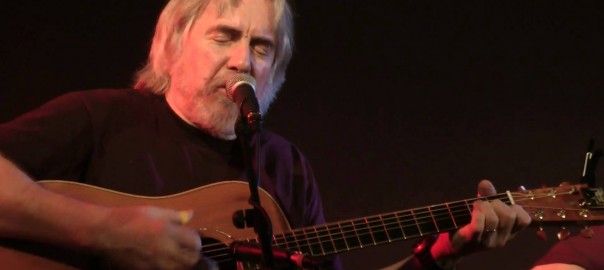
One of my favourites of all of Don Francisco’s songs is ‘The Power‘. Telling the story of the coming of the Holy Spirit at Pentecost, it speaks of a massively supernatural experience for an un-named member of the group of Jesus’s friends who met together on that morning.
And something that always strikes me with this story is that those guys were just ordinary people, just like you and I. God was fulfilling His promise on that day, just as Peter said (Acts 2:17-21) when he quoted the prophet Joel (Joel 2:28-32), “…I will pour out My Spirit on all people…”
All people. That includes you and me! There is only one Holy Spirit. He’s the same now as He was then. There’s no ‘junior’ or ‘budget model’ of the Holy Spirit. That same Spirit that came on Pentecost is exactly the same One Who comes to us now; He’s the One Who lives in us and guarantees our inheritance as saints of God (Eph 1:13-14; 2Cor1:22). Now if that’s not completely awesome, then I don’t know what is. The indwelling, tangible Presence of God, living inside ordinary people like you and me. The incredible assurance of knowing that we belong to God – our inheritance as saints is guaranteed. It’s almost unbelievable, isn’t it? But it’s true. I and many other believers can testify to that awesome Power living within us and giving Life to us in our mortal bodies, and giving us that assurance that we are indeed God’s children (Romans 8:16). Paul is not talking about some bookish theory or idea; he’s not talking about stuffy, dusty doctrine, he’s talking about a real, fizzing, bubbling, tangible reality for which all the doctrines in the world are simply no substitute. This is why nothing that anyone says to us can shake us from that knowledge – because it’s real. Some may say, ‘Ah, but the Bible says…’ or ‘Ah but in our church we don’t believe that…’ Well that doesn’t change what I know, and it does not change the believer’s assurance. It simply can’t.
So, have a listen to this song. Let it minister this fabulous truth to your spirit: If the Spirit of Him Who raised Christ from the dead dwells in you, then He Who raised Christ from the dead will give life to your mortal bodies because of His Spirit Who lives in you. (Romans 8:11) Let this truth minister to you in all its incredible reality and power.
This is real.
This is you
This is now
It was a crowd of mixed emotions That walked back to the room But steadfastly we set all our minds to prayer Waiting together with His relatives and friends Well above a hundred of us there Some of us He’d healed; some He’d raised up from the dead Some He’d called as He went walking past We recounted all the stories, with no detail left unturned Determined with a will to make it last
Outside in the street, the Feast’s cacophany began As crowds from all across the world convened Flowing upwards to the temple, with their firstfruits in their hands Unaware of all that we had seen Dawn turned into daylight, just like all the days before And again we lifted hands to God in prayer And though no-one had imagined what the morning held in store Still all of us felt something in the air
Then faint at first, we heard a sound that slowly grew to more Like a tempest far away upon the sea Descending ’til it filled the house with an unabated roar Like an army’s final shout of victory And right there in the midst of us From nothing burst a flame And tongues of fire rose high into the air Then separating, settled down on each of us the same And at once the sounds of praise were everywhere
And the flood of joy inside me then was more than I could bear Like peace and laughter joined into a whole ‘Cause the power that came from Jesus that we’d felt for all these years Was flowing deep and wide within my soul
Praise you, Jesus, for your Holy Spirit Praise you, Jesus, seated on the throne Praise you, Jesus, for the power you’ve given Praise and glory unto you alone
Praise you, Jesus, for your Holy Spirit Praise you, Jesus, seated on the throne Praise you, Jesus, for the power you’ve given Praise and glory unto you alone
Praise you, Jesus, for your Holy Spirit Praise you, Jesus, seated on the throne Praise you, Jesus, for the power you’ve given Praise and glory unto you alone
– Words and music by Don Francisco, used here with his kind permission