All posts by Tony

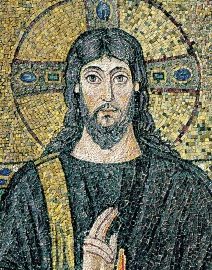
But Jesus Isn’t White – and Why it Matters

This is a great post by one of my favourite bloggers – Christy Wood – and I found the article to be very gentle, well-balanced and thought-provoking.

In some ways, it doesn’t really matter what Jesus looks like; it’s Who He is that’s important. But some of our skewed, modern mental images of Him can sometimes predispose us to think of Him in terms that just are not realistic, and thus can influence our attitudes towards our fellow humans. I will let you think of your own examples of this.

Meanwhile, this article by Christy really is outstanding and I highly recommend it.


Back when my husband was a youth pastor, one of his favorite object lessons was to print a bunch of images of Jesus and lay them on the floor. He would ask the teens to choose a picture that they resonated with and stand by it. He found some really crazy Jesus’s as well as more traditional ones.

Sweet Jesus in white robes, surrounded by children.

Tough Jesus, arm wrestling Satan.

Gentle Jesus, holding a lamb.

Powerful Jesus, calming the storm with one outstretched hand.

Bad Ass Jesus, with his sleeve rolled up showing a “love” tattoo on his muscular arm.

Hot Jesus, tall and handsome with a confident stride.

There were some similarities in the Jesus pictures, most noticeably His apparent ethnicity. In almost every image, Jesus had fair to medium skin tones, long hair, and light eyes. He appeared to be tall, thin, and good looking with definite European features.

But here’s the problem. Jesus isn’t White.

swirl-2780178_1280

Why do I love that so much? I think it’s because I can trash my mental image of Jesus along with my churchy, Christianese ideas of who He was. I’m super excited about starting from scratch!

While the Bible doesn’t give us a clear snapshot of what Jesus looked like, we definitely get some clues from Scripture as well as from history.

Jesus was a Jewish man in the 1st century. So, He looked Middle Eastern, with dark hair and eyes, and a medium to dark skin tone. Historians agree that 2000 years ago, the average human was significantly shorter than we are today. It’s likely that Jesus was just over five feet tall! And, don’t freak out, but there is absolutely no evidence that He had long hair or even a beard.

Jesus grew up in Roman occupied Israel where the cultural norm for men was short hair. I think people confuse the fact that He was a Nazarene (meaning He grew up in Nazareth) with being a Nazirite (someone who took a specific vow that included not cutting your hair). Jesus was not a Nazirite, so He probably had shortish hair….definitely not the long feathered locks we see in many traditional images.

As far as beards go, the only Biblical reference to a beard is a prophecy about the Messiah in Isaiah 50:6 “I gave my back to those who strike me, and my cheeks to those who pluck out the beard…” The gospels of Matthew, Mark, and John mention soldiers slapping Jesus in the face before they crucified Him, but that is all. No beard pulling.

Does your mind feel boggled yet? 

autumn-2815427_1920

It gets better. We know that Jesus was a carpenter before He started His 3+ years of ministry…or we think we do. “Carpenter” in our language means someone who makes things out of wood or potentially builds houses. I’ve seen many movie scenes with a tall, slender, European Jesus making wood shavings. But there is a problem with this picture. Israel doesn’t really have trees and they don’t build with a lot of wood.

When we were visiting Israel in 2015, I noticed this fact almost immediately. Historic and modern buildings are built from stone (along with things like chairs and mangers).

It is more likely that the real Jesus was some kind of stone mason. There goes slender, wimpy looking Jesus. If the real Jesus hauled around stones for a living, he probably had some decent muscles…which explains him easily flipping tables in the temple. ? (Matthew 21:12-13.)

A prophecy in Isaiah 53:2 says that “…he had no form nor majesty that we should look at him, and no beauty that we should desire him.”

Jesus was just an average looking Jewish man. He blended in well. So well in fact, that he was able to slip into the crowd and disappear on more than one occasion. (Luke 4:30, John 6:15, and John 10:39 for example.) Jesus was so ordinary looking that sometimes people didn’t even know who it was who healed them (John 5).

Why does this matter?

It matters because Jesus is the image of the invisible God (Colossians 1:15) and everything about Him points us to the Father. The truth is that the All-Powerful God of the Universe chose to come to earth as an ordinary man, a very ordinary man. His humility blows my mind and makes me catch my breath.

amazing-736881_1280

It matters because if our mental image of Jesus is totally wrong, maybe other things that we believe are wrong too. Maybe there is a lot of tradition mixed up with our truth.

It matters because too often we modern Western Christians seem to think we have a special insight into Christianity, and we need to remember that we are just Gentiles. We don’t have a full grasp of the Bible because we don’t have a full grasp of the Jewish culture. (Wow, did I feel that when I visited Israel! It was so good for me!!)

I want you to throw out every image of Jesus you have ever seen, and instead picture a short, stocky Middle Eastern man with dark hair wearing neutral colored robes and sandals on his dusty feet. His looks might be average, but the things He says and does are radical! And that beautiful, ordinary, incredible, unremarkable man is also God in the flesh. He came to show us the invisible God, die for the sins of the world, and restore our relationship with our Creator. And that’s amazing news!!

Why does an accurate picture of Jesus matter to you?


Here’s the link to the original article

Go And Sin No More – Or Else!

Grace Gives You Wings!

A woman, caught in the act of adultery, is brought to Jesus for judgment. She’s as guilty as sin. In the eyes of the law, she is condemned to die.

But with wisdom that silences her accusers, Jesus saves the woman’s life.

“I don’t condemn you,” said Jesus. “Go now and leave your life of sin.” This was not a threat, but a declaration of freedom. “Leave your prison of sin.”

When you sin you will have many accusers. Your conscience will accuse you. The law will accuse you. The judge and jury will accuse you. But Jesus will never accuse you. Instead, he speaks in your defense. “Charge this sin to my account, and let the accused go free.” And God the Judge announces in a voice that will not be overruled, “Case dismissed!”

Such good news is hard to believe. “But your honor, you don’t know what I’ve done. I’ve done some bad stuff.”

And the court of heaven replies, “No, you don’t know what Christ has done. He who knew no sin became sin so that you who were never righteous might become righteous.” It’s a divine exchange, his life for yours.

This is what grace looks like. Grace breaks the bonds of sin and removes the yoke of guilt. Grace lifts us from the clay and sets us on the rock. Grace draws our gaze heavenward and gives us wings to fly.

“If anyone sins, we have an Advocate with the Father, Jesus Christ the righteous.” 1 John 2: 1 (NKJV)

(Ellis, Paul. Stuff Jesus Never Said (Kindle Locations 630-635). KingsPress. Kindle Edition)

Priorities

I recently read a great Facebook post by Jeff Turner, where he speaks about getting our priorities straight when besieged by so many social media pressures and bandwagons to jump on to.

My own personal motto is to do as I see Father doing (Jn 5:19) and if He’s not doing, then I’m not interested. This is the keynote ‘slogan’ of my blog, in fact. I learned some time ago how to prioritise things for the Kingdom’s action in my life, but it is refreshing to see the same principles being expounded by modern-day prophets like Jeff.

But anyway, over to Jeff:


“Anyone out there still worried about Joseph Kony? Anyone? No? Surely you remember him though, right? No? You mean, the African warlord that turned everyone on social media into an activist in 2012 doesn’t even register anymore?

“Huh. Who saw that coming?

“You see, social media has afforded us with a convenient way of feeling like empowered activists who are really doing some heavy, hard hitting work, but, alas, what it’s actually done is turned us into a school of halibut, who move instinctively wherever the crowd moves, but who are almost incapable of independent thought or passion. When we aren’t being fed a cause to be passionate about, we don’t have one. Fortunately for us, though, the internet doesn’t let a week go by where it does not introduce us to a new cause demanding our complete and total devotion. We change our profile picture, display our hashtag holiness for the world to see, and are then on about something else by Saturday night. This not only keeps us from ever actually devoting ourselves to something real, it also leaves the causes of the week, which may actually be legitimate, largely unaffected, since we have been trained to only become involved superficially.

“Friends, you cannot be truly devoted to every cause social media shoves in your direction, and you don’t need to feel bad about that. If you thinly spread yourself out over every need that exists in the world, none of them are getting your full attention, and so nothing is really being done. You can’t stop and weep over the corpse of every raccoon, opossum or armadillo you pass on the highway, or you’ll never get anywhere. You don’t have to be cold and indifferent to the suffering of roadkill, but you also can’t become so emotionally involved that you can’t drive a half mile without pulling your car over. You have to find *a thing, or maybe two, and give yourself to those things. That’s how you progress and make change. You have to be ok with other people not being ok with you not being a zealot for what they’re zealous about. You have to not allow yourself to be guilted into jumping on bandwagons you know you won’t stay on anyways, and you certainly should not be jumping on them for the attention it gets you.

“I discovered a long time ago that I have a message I’m passionate about, and that is what I need to keep on about. If I’m drawn away by every trending issue, I will lose the thing I actually care about. I can agree that your passion is good, and your cause noble, and I can even find ways of addressing those issues using my own medium and methods. I do not, however, have to become consumed and swallowed up by a collective calling for the head of Joseph Kony, the firing of a pizzeria manager for failing to be nice to a customer who then blogged about it, or whatever.

“You have to be passionate about what *you are passionate about! Don’t settle for the fake. And don’t just do what everyone else is doing, if you don’t feel it in your gut. Study the issue out and discover for yourself if you care about it. *Then, by all means, give it your everything.

“Just some random thoughts for this evening. Peace.”

Thirty-Four Years

This entry is part 22 of 38 in the series Fiona

Today would have been Fiona’s and my 34th wedding anniversary. Half a lifetime ago, I married the most beautiful girl in the world, and for me it had been love at first sight. I can’t adequately express how blessed I am to have been married to this magnificent lady for nearly 33 years, before I lost her to cancer in October 2016.

We had a particular song, which was a lovely little number called ‘Where you go, I will go’, which we thought of as ‘our song’, and I featured it on my blog this time last year to celebrate what would have been our 33rd wedding anniversary. I want to feature it again today, because I still believe it. And it’s still Our Song.

Where you go, I will go.

Where she’s gone, I will go, eventually.

And there we will meet again.

Where you go, I will go
Where you lodge, I will lodge
Do not ask me to turn away, for I will follow you
We’ll serve the Lord together, and praise Him day to day
For He brought us together, to love Him and serve Him always


Header photo shows Ellie, Fiona and I with our gorgeous German Shepherd, Zeus, at Meadow Lakes Holiday Park, St. Austell, Cornwall, August 2013, where we were staying in our caravan. This was where we were holidaying when we first noticed the symptoms of the cancer.

Zeusy was a huge dog, but he wasn’t as big as the camera angle makes him look in this picture!


Confused by the Bible?

My online friend Dave Carrington posted a real gem on a Facebook group we are part of, and I wanted to share it with you.

As background, let me explain that many Christians, myself included, were always taught that when reading the Bible, we should ask the Spirit to tell us how that particular passage* relates to us today, and how to apply it in our daily living. While this is an admirable sentiment, it can be extremely confusing because the Spirit may not be speaking through that particular passage you have been given/randomly turned to/whatever on that day, and so we have to try hard to wrest some sort of meaning from the passage even though that’s not really on today’s menu. As I have said before, the point at which any given Bible passage becomes the Word of God is when the Spirit makes it real and relevant to us now, and sometimes it might be that He’s just not saying anything through that particular passage at that time. In those circumstances, either ask for guidance or simply go and read something else. The truth is that while the Bible is indeed an incredible book, or indeed library of books, it is not a magical grimoire of spells and incantations to enable us to summon our god like some sort of spirit. And it can be confusing for some people when the things they expect from a ‘plain reading’ of the Bible simply don’t happen. You see, God is a person, not a book, and certainly not a vending machine, and He speaks as He wills; we can’t force Him ito our schedules! In these times, Christians are indeed re-awakening to the significance of the Bible, but under the much more relevant aegis of sensible, intelligent and spiritual interpretation under the Holy Spirit, and discarding the old ‘one size fits all’ approach. It’s so much better, because God gets more of a chance to use the Scriptures to speak to us personally, rather than generally.

So with all that in mind, let me pass you over to Dave for him to flesh out those ideas:


“There are things in the Bible 1) that have eternal significance to a universal audience. There are things 2) written to specific groups for specific reasons at specific times. There are things 3) that are historical alone, and things 4)that are not at all literal but allegorical in nature.

“Of course we can learn and gain certain wisdom from ANY of these by the Spirit of God- BUT when we don’t understand the base difference in these writings, we will a) be confused about our own life, b) confused about our relationships with others, c) confused about the nature and character of our Loving Creator/Father, and d) trying to apply things to our situations that have absolutely no application in our life whatsoever.

“If you’ve been taught that everything in the Bible applies to you currently or is somehow tied to future events in your life… then you have been taught in (confusing) error. And if so… you are not alone.

“Sometimes we don’t know just how confused we are until the scales are removed from our eyes and we can see TRUTH that SO greatly changes our vision awareness & perspective, that we are now able to see things that were always ‘there’, but were blocked (in our awareness) by things not meant to be there at all.

“Holy Spirit is moving some obstructional things that have hindered our vision and were never supposed to be there… so our awareness can be changed to behold the things that are; The things that are true.

“The Awakening. It’s here. You’ll see.”

– Dave Carringer


*Note: ‘Passage’, not ‘portion’. I really can’t stand it when people refer to a Bible passage as a ‘portion of Scripture’, like it’s a cake or a bag of chips…and like there’s not enough to go around…

An Excellent Series on the Bible

I was a regular reader of the blog ‘The Evangelical Liberal‘, written by a chap called Harvey, although he hasn’t published much for a while. Anyway, I have found that I agree with much of what he writes; in fact, I find that he often actually puts down on [virtual] paper the exact same things I am thinking, but I have to admit that he expresses them much better than I do!

Fairly recently, Harvey has published a series on the Bible and the way we read and interpret it.

You know I prefer to do things that I see Father doing (John 5:19). I believe that in this day, God would have us read and believe the Bible through the ‘lens’ of His Spirit; this is as it always should have been. And I believe that of all the ‘Great Deceptions’ that people claim will happen, none is greater than the rubbish that is spouted by many people who call themselves Christians (and I am no judge of that) but abuse the Bible terribly, corrupting its message to others. Fair enough, they can believe what they want, but to impose those beliefs on others too, usually for monetary profit….think televangelists, and you will know the sorts of people I am talking about.

And, after pulling the Bible apart, as it were, do we find that the Bible is still useful? Is it true that if one part of the Bible is wrong, you might as well throw it out or use it as a doorstop?

In this series, then, which is reblogged here with his permission (thanks bro!), Harvey examines, in a number of articles, the ways in which we look at the Bible. Please do listen to the Spirit as you read this blog. And if you hear Him speak, as always, do not harden your heart.

Rethinking the Bible – an intelligent introduction to the series

Bible posts Round-Up – where he provides links to articles he has written before on various Bible issues

The Bible – The Good Book, or a very bad book? – a “…look at the worst stuff in the Bible and the terrible uses Scripture has sometimes been put to”

Is the Bible the Inspired Word of God? – A fascinating article on a fascinating subject

Is the Bible inerrant? – This is the real crux. Is the bible ever wrong?

The Bible – truly perfect and perfectly true? – Ideas on perfection

The Bible – a question of interpretation? – Making sense of it all

Sola scriptura – is the Bible really all we need? – Is the Bible alone sufficient?

What does the Bible really say about inerrancy? – An epilogue giving an analysis of the ‘inerrancy’ proof-texts

Paul and Women

One of the huge scandals in some of today’s churches is the way in which women are handled. One aspect of this is the way in which the words of St. Paul have been used to stop women obtaining office in the established Church. And, in setting those rules, Church leaders have robbed their congregations of fully half of the real resources of their churches.

This is not a new phenomenon; it has been going on in one form or another for centuries. And it’s not going to change overnight. But things are indeed changing…

In this piece, my friend Tim Chastain of ‘Jesus Without Baggage’ writes a superb piece on how Paul’s writings have been, and still are being, misused.


The Many Women Leaders in Paul’s Circles Don’t Seem to Represent Christian Patriarchy

Those who embrace Christian patriarchy and restrictions on women in church often refer to 1 Corinthians 14 for support:

Women should remain silent in the churches. They are not allowed to speak, but must be in submission, as the law says. If they want to inquire about something, they should ask their own husbands at home; for it is disgraceful for a woman to speak in the church.

Another favorite passage is 1 Timothy 2:

A woman should learn in quietness and full submission. I do not permit a woman to teach or to assume authority over a man; she must be quiet.

Patriarchist usually attribute both passages to Paul, but Paul almost certainly did not write 1 Timothy and the passage in 1 Corinthians might be a scribal gloss. However, our purpose here is not to dismiss the passages but to compare their use to Paul’s actual experience with women in his ministry.

Women church leaders in the New Testament

Priscilla the Teacher

Paul’s letters (and the book of Acts) introduce a number of women who are leaders in the church. Perhaps the best known is Priscilla (Prisca) who is half the leadership team, Priscilla and Aquila. According to Acts 18, Paul first met Priscilla in Corinth; she and her husband had left Rome during the Jewish expulsion. Later Paul, Priscilla, and Aquila sailed for Ephesus.

Paul continued on from Ephesus but Priscilla and Aquila remained. When Apollos came to Ephesus preaching an incomplete version of the good news, Priscilla and Aquila pulled him aside and explained the good news more fully. We next find Priscilla mentioned in the final greetings of 1 Corinthians: ‘Aquila and Priscilla greet you warmly in the Lord, and so does the church that meets at their house.’ This is the only time Paul ever mentions Aquila before Priscilla.

Finally, in Romans (his last letter) Paul says: ‘Greet Priscilla and Aquila, my co-workers in Christ Jesus.’ They had apparently returned to Rome. Paul calls them his co-workers—both of them. It doesn’t sound to me that Paul was concerned about Priscilla’s leadership roles.

The Women Paul Knew in the Roman Church

In his final greetings to the Roman Church (Romans 16), Paul mentions a number of people—including a lot of women besides Priscilla. They include the Apostle Junia who was, according to Paul, outstanding among the apostles, and [was] in Christ before I was’.

Early Church Father, Chrysostom, wrote of Junia:

[T]o be an apostle is something great. But to be outstanding among the apostles—just think what a wonderful song of praise that is! They were outstanding on the basis of their works and virtuous actions. Indeed, how great the wisdom of this woman must have been that she was even deemed worthy of the title apostle.

There was also Mary, ‘who worked very hard for you’; I doubt she was known for her cooking and teaching of children. And Paul says: ‘Greet Tryphena and Tryphosa, those women who work hard in the Lord…Greet my dear friend Persis, another woman who has worked very hard in the Lord.’ As with Mary, I doubt they were celebrated as great cooks but rather were known for their leadership.

The Church at Rome seemed to be filled with women leaders, and Paul did not object—and he does not mention that they should be silent in the church.

In the same chapter Paul introduces Phoebe the Deacon—who apparently delivered the letter to the Roman church. The term ‘deacon’ technically means ‘servant’ but seems to be much more than that in the church context. The term for Phoebe is the very same term applied to Apollos, Mark, and Timothy.

I commend to you our sister Phoebe, a deacon of the church in Cenchreae. I ask you to receive her in the Lord in a way worthy of his people and to give her any help she may need from you, for she has been the benefactor of many people, including me.

Paul was actually quite progressive in his day regarding leadership of women.

Paul and the Gifts of the Spirit

Paul makes a remarkable statement in Galatians 3:

There is neither Jew nor Gentile, neither slave nor free, nor is there male and female, for you are all one in Christ Jesus.

Paul nowhere suggests that any group of believers (Jew, Gentile, slave, free, male, female) is restricted from any category of ministry. We are all one; no group is superior to any other group, but not every individual serves in the same way. However, Paul does tell us how believers find their place in the church.

1 Corinthians 12:

To one there is given through the Spirit a message of wisdom, to another a message of knowledge…to another faith…to another gifts of healing…to another miraculous powers, to another prophecy, to another distinguishing between spirits, to another speaking in different kinds of tongues, and to still another the interpretation of tongues. All these are the work of one and the same Spirit.

Paul adds:

Now you are the body of Christ, and each one of you is a part of it. And God has placed in the church first of all apostles, second prophets, third teachers, then miracles, then gifts of healing, of helping, of guidance, and of different kinds of tongues.

No restriction to any gift is based on being Jewish, Gentile, slave, free, male, or female. In fact, remember:

  • Junia the Apostle
  • Philip’s daughters who were Prophetesses
  • Priscilla the Teacher, and
  • Phoebe the Deacon

Women in Paul’s circles were active in leadership. I believe those who teach that women cannot be church leaders are gravely mistaken.


Here is the link to the original article

Header picture shows the brilliant Dawn French in her role as Vicar ‘Geraldine Granger’ in the classic British sitcom, ‘The Vicar of Dibley’

Matt Distefano on Universalism

One of the more controversial ideas in Christendom at the moment is that of Universalism – that everybody gets ‘saved’. It’s certainly not a new idea; there is in fact good evidence to suggest that it actually formed a major part of early Church doctrine. Personally, I am myself a ‘hopeful Universalist’, a bit like C. S. Lewis was. That is, I would like to think that God is big enough to be able to ‘save’ everybody, in some form or another.

Whatever our views on the subject, it is sadly true that many of the idea’s detractors have taken the ideas of Universalists and twisted them to mean what they were never meant to mean. Unfortunately, this happens a lot in religious discussion, but I am prepared to believe that this is more due to a breakdown in communications rather than deliberate misrepresentation.

For this reason, I would like to share a piece by Matthew Distefano, whose work I have mentioned before in my blog. In this article, he gently attempts to set straight the record on some of the points that some of his objectors have raised.

What about justice? What about Hitler? What about Scripture? It’s a really good article and definitely deserves to be read.

Clicking the picture below (that’s Matthew, by the way) will take you to the article on Patheos (opens in a new tab).

Enjoy!

Did Jesus Exist?

Well, of course I am going to answer that question in the affirmative because I claim to know Him personally. For myself, I’m in absolutely no doubt at all; I know many of my readers hold this view too and this piece is not really aimed at them, although they will find it encouraging.

But I appreciate that this faith position is not necessarily held by many people; for many today, the whole question of Jesus and His existence is irrelevant to life in today’s world. And I can understand that; I thought like that once too.

But the case for an historical Jesus is actually strong, in terms of documentary evidence. In this beautifully-balanced piece, Prof. Lawrence Mykytiuk presents the contemporary and near-contemporary evidence for the actual existence of Jesus. It’s very scholarly and you can go in as deep as you want to (with his comprehensive end-notes to the article) but it’s also easy to follow. I heartily recommend it.

Click the text/graphic below to go to the article.

(BAR referring to the ‘Biblical Archaeology Review‘ magazine)