Monthly Archives: September 2026

Wisdom Fragments

Well ok, I admit that I’m really scrabbling to find new names for these ‘short bites’ collections, which, with this piece, are now thirty-nine in number! But fragments (of anything!) come in various sizes, as do these short paragraphs, so I thought I’d use that word as it captures that variety nicely.

Here we go:


We are all the authorities over our own humanity.
– John Pavlovitz

The church spent centuries arguing about who’s in and who’s out while Jesus kept eating dinner with whoever showed up.
– Beau Stringer

The …wounds that had nearly killed him were  gradually becoming a part of his history, not a limitation on his future.
– J. C. Jarvis, Nordland

The awakening needed cannot break through to their religious crusted mind
– Glenn Regular

The fact that you learned from your mistakes and deconstructed from man-made culty religion is awesome … and puts you leagues above the ones who haven’t. Welcome to the progressive subset of Christianity! We may be smaller but we value the message of Jesus and His examples over the Pharisaical religion and even the cult most churches have become.
– Carla

Dear Christians, Jesus didn’t ask for proof of work before multiplying loaves. He fed the hungry because hunger itself was proof enough.
– Ortinel

There’s a Religion-free Jesus that belongs to all of us
– Rob Cottrell

The Spirit does not make Scripture less authoritative. The Spirit rescues Scripture from becoming an idol in the hands of Religion. The Bible becomes a witness rather than a weapon, a window rather than a club, a testimony pointing beyond itself toward the living Christ. That is what Paul meant when he said that “the letter kills, but the Spirit gives life.”
– Glenn Regular

The negative comments [to someone’s joy-filled Facebook post] are typical of Puritanism. If you’re having fun; if you are happy, then somewhere along the line you must be sinning. And it’s their job to tell you that.
– Me

…a critical part – an important part – of deconstructing faith, is separating Jesus from Christianity[1]
– Rob Cottrell

It’s like how the phrase ‘the whole counsel of Scripture’ simply means that they ignore different Scripture passages from the ones you do… 😉
– Me

“The most offensive thing about the Father of Jesus has always been who he accepts, not who he rejects; who he includes, not who he excludes. Religion has always gotten this precisely backwards, and this is why the way of Jesus is a narrow way. Not narrow in the sense that it is accessible only to an elite few, but in that those who think themselves elite reject it by default.”
– Jeff Turner

Now, if you want to make a populace that is dependent on its leaders, that will do whatever its leaders tell it to do, what better way than to tell them they can’t trust themselves?
– Susan Cottrell

Something that inerrantists invariably fail to notice is that when they use their Scripture verses to battle your Scripture verses, all they are doing is to demonstrate that the Bible does in fact contradict itself, and therefore it cannot in fact be inerrant.
– Me

As per usual, I liked to see the good side of everyone, which often left me feeling somewhat let down…
– Adrian Cousins, Death Becomes Them, Kindle Edition, location 1898

“Through those pages [of aviation magazines – Ed], as I grew up, I began to absorb all the good things that aviation gives you – a sense of captaincy, a passion for science, and the importance of discipline, to name a few. And I became increasingly aware of an apparent paradox of aviation, one that becomes increasingly familiar to those few ‘artsy’ pilots who venture into aviation journalism. Flying is primarily about emotions, it’s driven by the sense of freedom, the beauty and majesty of endless landscapes, and things like watching the sunset at the end of a flying day. But you can’t just abandon yourself to emotion and forget about the practicalities (“Carb heat on!”)[2]. It’s a fine line to walk for me, my ideal pilot being part robot and part poet.”
– Eugenio Facci, Editorial, Pilot Magazine, May 2025

One day I was deep in prayer it was shortly after I lost my Sweet young baby Bluregard [a pet rat – Ed]. I was praying that God would let me see Blue again later, and he said “What kind of a father would I be if I didn’t allow that…”
– Jaime

“Pastor, can you please tell me why you neglected to inform me that tithing was required for my salvation the first time I walked into your church? I could have died and gone to hell because I wasn’t tithing!”
– Ross Canning

Time spent on reconnaissance is seldom wasted
– Field Marshal Sir Arthur Wellesley, First Duke of Wellington

You are under no obligation to explain yourself, justify your calling, or submit to the interrogation of a broken, bad-faith system.
When people or structures approach you with “gotcha” questions—not out of a genuine desire to seek truth, but to control, judge, or categorize you—the most centered, powerful thing you can do is refuse to play their game.
You owe no data to a system that only wants to use it against you.
– Bob Young

[The] problem with ‘repentance’, as my old congregation’s leaders used to describe it, is that it denotes a ‘turning around’; a 180-degree turn. Therefore if you repent twice in a row, then you’re going the same direction as you were in the first place. And so on for each successive repentance. Which is probably why many Christians end up covering the same ground over and over again without actually getting anywhere; without moving forwards at all…
– Me

I know what it’s like to be trapped in religious legalism, and I know what it’s like to be free. I know what it is like to be overwhelmed with lies you think are true, and I know what it’s like to discover actual truth. This is why I am so passionate about pushing back on the new wave of conservative extremism. I’ve already been there and done that, and I know that none of it actually works. The formulas and promises are attractive. They seem safe and secure to fearful people looking for control. But they don’t deliver goodness. The true fruit of legalism and behavior-driven religion is emptiness, pain, confusion, and death. They pretend to be salvation, but they deliver destruction.
– Christy Lynne Wood

No ruler should put troops into the field merely to gratify his own spleen; no general should fight a battle simply out of pique.
– Sun Tzu, The Art of War XII, 18

During an early morning walk I was amazed to see an elderly gentleman collecting his dog’s excrement and taking it home with him. Holy crap, I shudder to think what his other hobbies are!
– Alan Thackray, Viz Letterbocks

Footnotes

Footnotes
⇧1 Meaning the distortions that Religion has placed on His character
⇧2 An essential action which is part of routine en-route checks and also in preparation for landing

Come, Let us Worship and Bow Down

Despite all the current Progressive[1] ideas and questions ‘doing the rounds’ about whether Jesus actually wanted to be worshipped, and despite many other ideas too also trying to neuter the idea of bowing down in worship and submission to Jesus the King, I myself can think of no other place I’d rather be than worshipping at His feet.

There is a wholeness, indeed a holiness, in Jesus’s Presence that, for those whose hearts have the ears to hear and the eyes to see, is simply irresistible. Here is the Pearl of Great Price; here is a consciousness of the Presence of God which is as incomparable as it is genuine, as it is real. Even as I sit here and type this piece, my heart is full of worship for Jesus and full of gratitude for what He’s done for me – both 2,000 years ago, and also in my recent past right up to the present day.

At Jesus’s feet is blessing. At Jesus’s feet is understanding. At His feet are acceptance, forgiveness, total and complete peace, healing, reassurance, faith and above all, Love. The Love indeed, that will never let me go.

Why would I want to deny that, either for myself or, worse, for others?

No, I am a worship leader and I always will be[2], despite it being nearly ten years since I have played in a church, and despite it being something like eight or nine years since I actually led a worship meeting. And how I manifest it today; how I bring people into the Presence of God, is to put worship music tracks, that God asks me to use, onto my blog for people to worship along to. And I do this with an absolute certainty that God will use those songs to bring some of my readers into His Presence. Not everyone will be touched by the music; and not everyone will feel as if they want to go along with the idea either. But let me gently tell you that in His Presence is peace, healing and Love, if you will simply let Him minister to you using that music.

Even – and especially – if you have been badly hurt (as I have) by other Christians. Even if you feel like God has let you down. Even if you feel that He can never understand you, nor can He reach you in your place of need: know that He is here with me and He’s there with you too.

And so here is the beautiful song ‘Come, let us worship and bow down’, from the Christ for the Nations tape ‘The Lord Reigneth’, published in the UK by Harvestime as ‘Celebrate’.

Don’t let the source of the music put you off[3]. Yes, this was sung by essentially a Fundamentalist, Evangelical group (albeit some 40 years ago!). But the key to it is your heart. Let your heart use the music as a vehicle to help you transition into a consciousness of the Presence of God. He’s there all the time anyway; all we are doing here is making you aware of that, and enabling you to enjoy His Presence. Yes, enjoy His presence. That’s what humans are designed for; the Westminster Shorter Catechism suggests that ‘the chief end of man is to glorify God and enjoy Him forever’. The Hebrew Psalmists’ work is full of references to the joy of being in God’s Presence, for example in Psalm 16:11, “You make known to me the path of life; you will fill me with joy in your presence, with eternal pleasures at your right hand”. There’s nothing wrong with joy; with enjoying God. Many miserable grey Christian killjoys would suggest that if you’re happy then you must be sinning, but in fact the ultimate joy is to be in God’s Presence. There’s just no place else I’d rather be.

For those whose hearts are turned towards Him, worship is a natural extension of a life lived in His Presence. Out of the fullness of the heart, the mouth speaks.

Right, time for me to stop blathering and give you the song. Lyrics are given below the track itself. I’ve also included another two songs: Be Exalted O God and Now Unto Him Who is Able, for your further encouragement. Into His tangible Presence we go…

Come, let us worship and bow down
Let us kneel before the Lord our Maker
For He is our God, He is our God
He is our God, He is our God

And we are the people of His pasture
And the sheep of His hand


I will give thanks to Thee
O Lord among the people
I will sing praises to Thee among the nations
For Thy steadfast Love is great
Is great to the heavens
And Thy faithfulness, Thy faithfulness to the clouds

Be exalted, O God, above the heavens
Let Thy glory be over all the earth
Be exalted, O God, above the heavens
Let Thy glory be over all the earth


Now unto Him Who is able to keep you from falling
And to make you stand in His Presence blameless and with great joy
To the only God our saviour, through Jesus Christ our Lord
Be the glory and the majesty, dominion and authority
For now and ever amen!


I hope this post has blessed you beyond anything you had ever imagined would happen before you began reading it! And it would not surprise me in the least if that has been the case!

Grace and Peace to you!

Footnotes

Footnotes
⇧1 The idea of ‘Progressive Christianity’ is an ill-defined blanket term supposedly describing a genre of Christians who are moving away from traditional doctrines and essentially finding things out for themselves. I’m not going to go into detail, if indeed such a thing were possible, but the entire concept is completely misunderstood by most mainstream Christians, even if only because it’s so badly defined. So please don’t be afraid of the term in any way!
⇧2 The gifts and calling of God are without repentance (Romans 11:29). This means that God does not change His mind about, nor does He withdraw, the calling, the gifts and anointing He places on one of His people. Even today, I could stand in front of hundreds of people and the anointing would be just as strong as ever, such is the power of my calling. I say this not as a boast – I am Autistic; I don’t do boasting! – but as a simple statement of fact.
⇧3 I understand from  a friend that Christ for the Nations are pretty much hard Fundamentalist, although I would be happy to be advised that I am wrong!

I Side with the Jesus Before Christianity and the Jesus Beyond Christianity. I do not side with the Jesus Of Christianity

Jesus did not come to convince humanity that God needed to be persuaded to love. He came to reveal that love was the very nature of God.

A Guest post by Glenn Regular

When I say, “I side with the Jesus before Christianity and the Jesus after Christianity, but I do not side with the Jesus of Christianity,” I am not rejecting Jesus. I am endeavouring to distinguish between the Jesus revealed in the Bible and the many contradicting images of Jesus that Christianity has constructed through centuries of denominational interpretation, institutional traditions, theological systems, cultural assumptions, and human agendas.

The Jesus before Christianity is the Jesus who walked among humanity, revealed the heart of God, announced the Kingdom of God, and called people into a transformed way of living. The Jesus after Christianity is the living Christ who cannot be confined, controlled, or owned by any religious institution. The Jesus of Christianity, as often presented throughout history, is often a Jesus filtered through religious traditions, religious biases, rather than the Jesus who first reveals the unchanging characteristics of His loving Father.

The Jesus before Christianity did not come to establish another religious system competing with the religions of the world. He did not arrive with a blueprint for buildings, denominations, religious hierarchies, political influence, or institutional power. Of political dominance, He came proclaiming the Kingdom of God. His message was not about creating a religion called Christianity but about revealing a new reality in which humanity could know God as Father and awaken to their true identity in relationship with Him.

Jesus announced, “The kingdom of God has come near. Repent and believe the good news” (Mark 1:15). The good news was not just a religious transaction or a promise of escape from hell-fire punishment. It was the announcement that God was reconciling creation to Himself and that a new humanity was being birthed through Christ. Humanity was chosen by God before the foundation of the world, that we should be holy and without blame before Him in love, Jesus came to reveal what God is like and what humanity was created to become.

The Jesus before Christianity was not found among the powerful and religiously elite but among the broken, the overlooked, and the rejected. He touched lepers when others avoided them. He ate with sinners when others condemned them. He welcomed children when others dismissed them. He spoke with women when religious culture marginalized them. He showed compassion toward outsiders and exposed the hypocrisy of those who used religion to elevate themselves above others.

Jesus’ greatest conflicts were not with those who had no religion but with those who had turned religion into a barrier between humanity and God. He challenged the religious leaders of His day because they had confused knowledge about God with knowing God. They had Scripture but missed the heart of the One Scripture revealed.

Jesus said, “You nullify the word of God for the sake of your tradition” (Mark 7:13). His warning was not against seeking God but against allowing human traditions to replace the living voice and character of God. Christianity can preserve words while losing the heart behind those words. It preaches doctrine while neglecting mercy. It can defend beliefs while failing to embody love. What transpired was that religion shrouded the realization that the rooted identity of humanity was in God before the worlds were formed, deceiving them that their identity was rooted in Adam, causing them them to think of themselves as being born fitted for hell.

The Jesus before Christianity revealed a God radically different from the god of Christianity. He revealed a Father who seeks the lost, restores the broken, forgives enemies, and loves without boundaries. Jesus declared, “Whoever has seen me has seen the Father” (John 14:9). The ultimate revelation of God is not found in human speculation but in the person of Jesus Himself.

The Christian gospel produces fear, hatred, exclusion, superiority, and condemnation must be questioned as to whether its adherents are seeing the God revealed by Jesus or a god shaped by human imagination. Jesus did not come to convince humanity that God needed to be persuaded to love. He came to reveal that love was the very nature of God.

The Jesus after Christianity is the living Christ who continues beyond every religious structure built around His name. Christianity may speak about Christ, but Christ is greater than Christianity. No denomination, movement, theological system, nation, or institution can claim ownership over Him. Jesus belongs not to a religious tribe but to humanity.

Paul wrote, “Christ is all, and in all” (Colossians 3:11). The risen Christ cannot be imprisoned within human categories. He is not the possession of one tradition, one culture, or one interpretation. He is the living revelation of God’s purpose for creation.

The tragedy of Christianity throughout history is that it has often attempted to protect Jesus by controlling Him. It has sometimes created boundaries around the One who came to break down walls. It has sometimes emphasized being right over being loving, defending doctrines over demonstrating compassion, and preserving institutions over embodying the Kingdom.

Jesus never said the world would recognize His followers by their ability to win arguments, defend religious systems, or enforce moral codes. He said, “By this everyone will know that you are my disciples, if you love one another” (John 13:35). Love was not a secondary teaching of Jesus; it was the evidence that His followers had truly understood Him.

The Jesus of Christianity, as often presented, has become a Jesus shaped by human fears and desires. Some portray Him primarily as a judge waiting to condemn rather than the Savior seeking to restore. Some use His name to justify political power, nationalism, wealth, exclusion, or division. Some make allegiance to a religious system the measure of faithfulness rather than a transformed life of love, humility, and compassion.

But the Jesus revealed in Scripture says, “I desire mercy, not sacrifice” (Matthew 9:13). He continually moved toward people rather than away from them. He entered places religious people avoided. He embraced those society rejected. He demonstrated that the heart of God is not found in separation from humanity but in God moving toward humanity in love.

To side with the Jesus before Christianity and the Jesus after Christianity is to return to the simplicity of His invitation: “Follow me.” Jesus did not say, “Build a system around me.” He did not say, “Create institutions in my name.” He did not say, “Defend my reputation through religious conflict.” He said, “Follow me.”

Following Jesus means allowing His life to redefine our understanding of God, ourselves, and one another. It means recognizing that the Kingdom He proclaimed is not built on fear but on love, not on domination but on service, not on exclusion but on reconciliation.

The Jesus before Christianity revealed the heart of the Father. The Jesus after Christianity continues to reveal that same heart to the world. The question confronting humanity is not simply whether we believe in Jesus, but whether we are willing to encounter the Jesus who stands beyond religious assumptions and allows Him to transform us.

The greatest challenge is not discovering Jesus. The greatest challenge is letting go of the versions of Jesus Christianity has created so that we can clearly see the Jesus who has always been there.

– Glenn Regular, used here with his kind permission

First Solo – Thirty Years On

This entry is part 24 of 24 in the series Beautiful Destroyers
I commemorate the thirtieth anniversary of my First Solo Flight by reblogging this 2016 piece describing the great event!

Thirty years ago today, I flew my First Solo in a light aircraft, thus joining the ‘Fraternity of Pilots’, one of the select few people who has flown an aircraft all by themselves. This is a unique event in a Pilot’s career, indeed in a person’s life. It only happens once, and it is a flight I will remember forever. Here, then I reblog an article I wrote describing my First Solo, to try and communicate just how special it was.

Cleared for takeoff – here we go!


“…and I was being chased by at least three Focke-Wulf 190s…”

“What, in a Tempest? Couldn’t you just outrun them?”

“Well, no, it wasn’t like that you see…..carry on, you’re doing fine….”

What an honour, having veteran flying instructor, senior flight examiner and war veteran Rufus Heald have me fly him for my pre-solo check ride. This is the final check by a senior instructor, to see if he agrees with your Instructor that you are ready to take an aeroplane up by yourself for the first time – the First Solo. And what a real gentleman Rufus was, taking my mind off my nerves by regaling me with war stories – albeit stories about being chased by German fighters!

But I have to be honest and say that in some ways I kind of felt like I couldn’t wait to get him out of the aeroplane so I could go flying by myself for the first time ever. Rufus, if you read this, please accept my apologies, although I am absolutely sure you understand![1]

‘Any questions?’

‘Just the one, Rufus: if some clot decides to prang a Dash-8 [an airliner] right on the runway intersection, what do I do?’

‘No problem. Just follow the A38 eastwards all the way to Exeter, and land there’

‘Oh, ok, thanks.’ A sobering thought, that; if that happened, then my first solo would turn into my first solo cross-country flight, but fortunately that doesn’t happen. Good job too; I haven’t started my navigation training yet.

‘Right then, off you go and good luck!’

So, once Rufus had hopped out, it’s interesting to see how quickly the flying discipline comes in. Settle down, now; you’ve got to get this next bit right first time, there’s no second chances. Crumbs, this is scary, do I have to do this? Yes, you do; you’ll never be a Pilot unless you do this.

Right then, time to get cracking. Power checks: check clear behind, set 1,200rpm, check both magnetos on, brakes on and oil temperature and pressure (T’s and P’s) in the green, set 2,000rpm and check brakes holding. Select carburettor heat HOT and rpm drop within limits at less than 175rpm, also no rough running and select carb heat COLD and check the rpm recovers to 2,000, Mag drop right – 100rpm; mag drop left – 100rpm. Max drop 125rpm so within limits; difference between drops less than 50rpm (in fact they were the same) so that’s ok. Mags both on again, suction gauge showing 3”-5” vacuum, ammeter charging, T’s and P’s in the green, Idle check – close throttle, 700rpm, that’ll do, reset 1,200rpm.

Now pre-takeoff vital actions: Trimmer set for takeoff, throttle friction nut set, mixture rich, magnetos both on and master switches both battery and alternator on, pitot heat off, primer IS locked, fuel on and sufficient, flaps up, Instruments: Direction Indicator, artificial horizon, altimeter has the QFE set [pressure setting to indicate height above aerodrome level], T’s and P’s again, landing light goes ON and transponder indicating 7000 and set to Mode C, doors and windows secure, straps tight, carb heat recheck then select COLD, controls full and free movement. Call: ‘Golf Tango Oscar, ready for departure’. I know my Instructor, Tim, is watching from the Tower right next to the Air Traffic Controller, in case anything goes wrong and I need any help. Not that he can give direct help; I think that when flying an aeroplane by yourself, you are more alone, and beyond direct help, than you can ever be in any situation on earth. Another sobering thought.

“Golf Tango-Oscar, backtrack line up Runway 31”

“Backtrack line up 31, Golf Tango-Oscar”

Right, this is it, then. Brakes off, and off we trundle from the holding point onto the active runway, rolling along to the far end of the runway and then turn the Cessna on a sixpence to line up. The familiar sight fills my view: the runway stretching off into the distance, promising imminent adventure, exhilaration, concentration and the ultimate in achievement – that of flying an aeroplane in complete defiance of the gravity that has held our ancestors earthbound for so many thousands of years. But this time I’m on my own; there’s nobody sitting in the right-hand seat and I know that the next five minutes or so are the real beginning of my flying career – if I get it right. But surely Tim and Rufus wouldn’t have let me go if they didn’t think I was up to the task?

Without any delay, the Controller’s voice comes in over the R/T: “Golf Tango-Oscar, clear takeoff runway 31, right hand circuit, surface wind three-three-zero, five knots”. Good, that’s the wind more or less straight down the runway, then; no significant crosswind component. “Clear takeoff 31 right hand, Golf Tango-Oscar”. So, hold the aeroplane on the toe-brakes, power to 2,000rpm and check T’s and P’s in the green, then brakes off heels on the floor [so toes away from the brakes] and full power applied smoothly. Everything happens very quickly but this is what I have been trained for. Check full power: 2,500rpm, T’s and P’s in the green, airspeed building, keeping straight using the feet on the rudder pedals and looking for 65 knots and rotate and….”AIRBORNE! Wooohooo!” the shriek of pure delight erupts spontaneously. I’m flying an aeroplane all by myself for the first time ever and the only way I’m going to live through this is if I get everything right. That’s honestly what I thought, you know! Right, concentrate now, five hundred feet, after-takeoff checks: Fuel is on and sufficient, Engine T’s and P’s green, radio tuned to Plymouth and we’ve got our clearances, Altimeter has the QFE in, landing light stays on because we’re staying in the circuit. Crumbs this aeroplane is performing so much better; we’re at circuit height, 800ft, already and only just turned crosswind. Must be because we’re so much lighter with only one person on board. ONLY ONE PERSON on board and I’m flying an aeroplane on my own oh my goodness this is crazy right settle down and remember your training. Set 2,000rpm for 80kt at 800 ft. And you’re going to land in a couple of minutes so you need to do something about that. Right then, turn downwind, level now with the end of the runway and report “Golf Tango-Oscar downwind to land” Just the one circuit for the first solo. “Golf Tango-Oscar, report final”. “Report final, Golf Tango-Oscar”.

Right that’s him told, now let’s do the downwind checks. Brakes are OFF (check them), undercarriage is fixed down, (and now miming the actions) mixture is rich, fuel on and sufficient, flaps up, instruments QFE in the altimeter – and we’re a little high; must be the excess power – T’s and P’s are good, landing light is on still, carb heat check – no rough running – and then selected COLD, hatches and harnesses secure; yours? Oh, there’s nobody in the right hand seat, now isn’t that weird? Aeroplane feels empty…. ok downwind checks complete, runway in my four-o clock position, time to turn base.

So, a neat 90-degree right turn and now I’m on base, the last part of the circuit before my final approach. Immediate actions: carb heat HOT, power back to 1,700rpm and hold the height as the speed decays; we are already within Vfe [maximum flap extension speed] so flaps to 20 degrees and watch the nose come down. Establish 70kt and 500fpm descent and re-trim the aeroplane. Everything’s looking good except that I’m still too high; now at 900ft instead of 800ft. I know exactly why; it’s because I didn’t have the weight of the instructor aboard (how ‘bout that!) and so the aeroplane had excess power at 2,000rpm so she was climbing slightly. Anyway, never mind why, what are you going to do about it? Nothing for it but to select full flap; save that until you’ve turned final so you’re not trying to do too much at the same time. Don’t let the aeroplane get ahead of you; you need to stay ahead of the aeroplane all the time. Crumbs the workload is so high in the circuit; no wonder they use it as a First Solo test. If you can do circuits, you can do anything. Looking for 70kt on the airspeed indicator for the final turn; plenty of speed, nice and safe. Slow turns on final are what kills people.

So, lined up on final approach and the call, “Golf Tango-Oscar, finals to land”

“Golf Tango-Oscar clear to land runway 31, surface wind three-three-zero, five knots”

“Clear land, Golf Tango-Oscar”, so now it’s all up to me. Let’s have those flaps now: the full 30 degrees of flap come on and pull the power all the way back and she comes down not quite like a piano, but at least like a dive-bomber anyway. Adjusting the rate of descent with power and the airspeed with the nose attitude, this is precision flying at its best. It has to be if you’re going to arrive properly in the right place. Setting 65kt all the way down final, trim it up, nice and easy, coming down nicely. 300ft: pre-landing final check – Cleared to land, runway is clear, happy with the approach (although still a little above the glideslope, still, I’m doing all I can about that), carb heat goes COLD so the engine can deliver full power in a potential go-around situation. Crumbs I love this stuff. Over the hedge now, looking for 60kt but still a little high, we’re safe as it’s a nice long runway. Flare now, nose up and arrest the descent, aeroplane now just a few feet off the runway and hold her off as the airspeed decays, she sinks and Bump she lands but the airspeed is a little too high and so she comes unstuck again because she still wants to fly and I don’t blame her, but re-establish the hold-off and add just a trickle of power to slow the rate of descent so she doesn’t come down like a safe and Bump she’s down again but this time she stays down. “Golf Tango-Oscar: six out of ten for the first one; seven for the second one”. Cheeky so-and-so; I’d like to see him try and do what I’ve just done. Still, Tim most likely put him up to it anyway; sounds like a Tim comment. “Congratulations, well done!” That’s more like it. I’ve just fulfilled the dream of my entire lifetime and as you can imagine I’m feeling pretty good about it. I am now a Pilot; granted I haven’t got my licence just yet – that is still more than nine months away – but it means that I have just joined that very few select people who have flown an aeroplane by themselves. I am now a member of the ‘Fraternity of Pilots’, and nothing will ever be the same again. The feeling is indescribable and I can tell you that it took approximately ten days for the delighted grin to disappear from my face.

To commemorate my first solo, Tim gave me a certificate to mark this milestone event. And because I flew my first solo on the ‘unlucky’ day of Friday the Thirteenth of September, 1996, and I am so completely and totally unsuperstitious, I asked Tim to annotate my certificate accordingly. Here it is:

As you can tell, that flight is etched indelibly on my memory. They say that you never forget your first solo; twenty years down the line and I can attest to that as a fact.

I know this article is a bit techy, but I wanted to put across as realistically as possible what goes through a Pilot’s mind as he is flying, and also to try to share some of the feelings of concentration, discipline, training, exhilaration and panic that the first solo entails. I hope you have enjoyed it.


Here is a video of a young student pilot doing her first solo. Listen out for her comments, like ‘Holy shit, I’m flying an aeroplane on my own!’ Having read my article, perhaps you can appreciate that a little more easily! This is a great little video which gives an intimate insight into flying a light aircraft solo for the first time. Enjoy!


Header image shows me and my son David departing Bodmin Airfield on 2nd May 2009 in my favourite Cessna 152, Golf Tango-Oscar, the aeroplane I flew my first solo in.

There’s an interesting backstory here. I had to get my Pilot’s licence signed by a senior examiner, and we didn’t have one of those at Plymouth Flying School at the time. So I’m thinking, like, Ok, David, let’s go flying at Plymouth and then drive from there to Bodmin to get my licence signed by Phil the Chief Examiner. Hey, hang on a minute, I’ve got an aeroplane! Why not just fly to Bodmin and take my licence with me? So that’s what we did. First time I’d done a landaway since my solo cross-country qualifier in 1997, and the first time I’d ever done a landaway at Bodmin [apart from some touch-and-goes in ‘97 when we had to go to Bodmin because weekend circuits were banned at Plymouth. I was converting onto the PA-28 Warrior and needed some landing practice in one]. It was the warm welcome we got at Bodmin, combined with a great first impression of the airfield and its surroundings, that decided David to do his flying training at Bodmin with Cornwall Flying Club, and then for me to move to Bodmin as my home airfield when Plymouth Airport closed.

The photo shows me performing a classic textbook soft-field take-off: full power, ten degrees of flap, stick right back to get the nose wheel off the ground early and craning my neck to see forward over the cowling. Aircraft gaining speed, looking to lift into ground-effect at about 50kt or so and ‘fly’ about three feet above the runway allowing the airspeed to build to 65kt at which point we rotate into the climb attitude for the climb-away. It all went really well, too….


tango-oscar-at-bodmin-2nd-may-2009

Footnotes

Footnotes
⇧1 Sadly, Rufus passed away a couple of years ago. On the plus side, I am good friends with his son, Nigel, who owns the RV-9A aircraft that I fly 😊

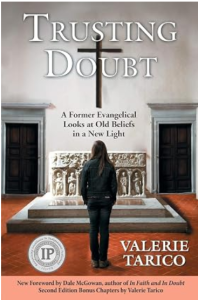
Reblog of “Book Review: ‘Trusting Doubt – A Former Evangelical Looks at Old Beliefs in a New Light’ from seven years ago

This entry is part 39 of 40 in the series The Problems of Evangelicalism
It’s interesting how transferring my blog articles to Substack has brought this to light…

Some of you will know that I have been gradually adding my older blog posts, from my WordPress blog, over to my Substack blog.

In the process of doing this, I have had many interesting opportunities to read blog posts reflecting what I thought at the time (well, obviously they did! 😂) and having a chance to compare the way I thought ‘back then’ to the way I think now.

This blog post I am reblogging here, I am doing because although I have really been laying in to what I see as all the faults of Evangelicalism, still I recognise that the vast majority of the individual people in Evangelical congregations are simply honest, loving, kind and gentle believers whose hearts are turned towards the Lord, and who follow Him with all their hearts. And I have periodically expressed the sentiment, too, that my ‘beef’, as it were, is not with the people (or most of them at any rate) but with the ‘system’.

And seven years ago, although I had not articulated my problems with Evangelicalism as extensively as I have today, still I had problems with it. But even then, I appreciated the good people that are in that faith, and this article has reminded me of that, and indeed that I have always felt like that.

And so here is the review of a book that delivered a scathing criticism of Evangelicalism, and indeed even tried to destroy not only the fakery of some people, but also the genuine, real faith – and its foundation, Jesus – in a storm of surprisingly, well, ‘mean’ prose. Nasty stuff. I’ll let you read the review now, because the words I wrote back then were much more immediate and my near-indignance comes through really well; indignance at the way the author tried completely to shred the faith’s credibility based on criteria that I did not agree with, not even slightly.

Ok. Over to the Tony of seven years ago:


I recently reviewed a book on Amazon, “Trusting Doubt: A Former Evangelical Looks at Old Beliefs in a New Light” by Dr. Valerie Tarico. (I have recently shared some of Dr. Tarico’s work on this blog, here).

I have to say that I didn’t like the book, and this is reflected in my review. In some of my own work, even though I might well present a dark picture of modern Christianity and even of some of its practitioners, I always nevertheless try to mitigate that darkness by giving a hopeful counter-argument of some sort. If this book produces such a counter-argument, then I did not read far enough to find it; I could only read about a third of the way into the book before I gave up for the sake of my own sanity. Also, bearing in mind that I feel like I am presently going into another ‘Dark Night of the Soul‘[1] (which is nowhere near as bad as it sounds!), if I had gone into such a Dark Night after having read this book, there’s a fair chance I wouldn’t have come out the other side in one piece 😉 Actually, that’s not true; it is God Who carries the believer through the Dark Night (Ps 23:4, Is 46:4, Phil 1:6, Jude 24) but I still I think I have made my point.

I would also say that I do not consider that my incipient Dark Night has influenced my perception of the book. As a scientist, I am well used to viewing things dispassionately and without letting my preconceptions influence my impressions.

Anyway, here is my review, for what it’s worth. It’s presented more or less verbatim from my review on Amazon (with a few extra bits added after further thought):

“Trusting Doubt: A Former Evangelical Looks at Old Beliefs in a New Light”

– by Dr. Valerie Tarico.

I really wanted to enjoy this book, and having read some of Dr. Tarico’s articles on her blog, I looked forward to reading something with some substance and containing interesting, thought-provoking and ultimately upbuilding ideas. However, while I appreciated the clarity, forcefulness and honesty of Dr. Tarico’s arguments, I have to say that there is little to like in this book.

There are a few welcome episodes of dry humour, and a couple of ‘lessons learned’ where, despite the dark and hopeless conclusions she reaches at the end of most chapters, she does manage to salvage a few gems of wisdom and learning.

But, otherwise, the book would be more suitable for those who already believe There. Is. No. God. ; for those seriously considering leaving the Christian faith (and this book would indeed convince you to do so); or for Goths.

After a reasonably upbeat introductory section, the book rapidly goes downhill faster than a well-tossed anvil.

While Dr. Tarico rightly tears into the presuppositions and conflicting assertions of Evangelical doctrines, such as infallibility of scripture, original sin and the inequalities (racism, sexism and other prejudices) expressed in the Bible which are also enacted in today’s society by many Evangelicals, she also examines the rightness and ‘goodness’ of Jesus’s miracles, and even manages to conclude that because Jesus did not heal everyone, that in actual fact his miracles were cruel (she uses that actual word) because not everyone got healed, even if it’s just because they didn’t happen to be there as Jesus walked by.

Wait, what? Really??

Many of the author’s arguments against God being good are based on the premise of what would I do if I was God, which I’m not, and neither is she. We cannot presuppose that we know best. I have to say also that not all the arguments are based in correct axioms nor in logical presuppositions. I am not going to provide examples, because I don’t want to go back into this book again to find them, for reasons which will become clear.

There seems to be an underlying bitterness that everything in the world is not good, or, at least, a bitterness that Christians appear to try to explain away the fact that shit happens and life is full of it. In actual fact, however, everyone with half a mind asks life’s big questions, and nobody, not just the Christians, has the answers. So you can’t blame Evangelicalism for that.

Apart from a few upbeat anecdotes like ones about her grandmother, and even that story she then tears to pieces, there is nothing to rejoice about in this book. Even the good is denigrated and life is portrayed as empty, dark, bleak and hopeless.

I have to say that I got about a third of the way through the book before giving up in despair. The nihilism is simply soul-destroying, if you believe in the soul anyway. I am an upbeat, optimistic and positive person, but at the end of each chapter I felt like going off and drinking myself into oblivion, something I would never normally contemplate. Or maybe piling my car into a very solid tree or concrete wall. Except that my airbags would save my life. Damn.

At the end of every chapter, I thought, Oh well this must get better, after all I agree with a lot of what she says, so let’s keep reading. But no. The darkness and oppression are relentless. There is no place in this book for joy, no place for happiness, and even the spontaneous, joy-filled and free laughter of my severely disabled daughter watching something funny (in another room) seemed totally out of place in the presence of the cloud of darkness that seemed to emanate from this book.

There is no mention of life’s joys, the good things, the light, the scenery, people being nice for the sake of it, kindness, love and laughter. There is no mention of the tremendous good that Christianity has brought into the world, yes, along with all the horrific things it has done as well. The fault-finding of God in this book is unmitigated by any mention of his benefits. Indeed, it is as if the entire picture of God in this book is based entirely on the faulty image of Nasty God as espoused by the Evangelicals, and it doesn’t move on from there but stays down in the dumps. Instead of saying ‘Look the Evangelicals believe in this nasty God, BUT….’ , she instead goes on to explain why God, if he exists, is horrible just as the Evangelicals say, but giving her own reasons based on the bloodiness of nature and that life deals in crap on a daily basis.

No, this book is simply the apparently logic-based ranting of someone who has been damaged by Evangelicalism – as have I – and has gone on to get the qualifications and experience to be able to write an authoritative declamation against Evangelicalism, which undoubtedly deserves it!

But for those who want to see how someone else has approached the deconstruction of faith and come through, well, I didn’t get that far in the book so I don’t know if it has a happy ending, in terms of something solid and hopeful to take home at the end of the book. This book appears to have been written by someone in Fowler’s Stage 4 in the Stages of Faith (Google it) and has not yet come through to Stage 5. Like I said, the book may come through, but I can’t stand to read any more of it. I’m not afraid of logic; I am a professional scientist. I’m not afraid of deconstruction; I have gone through it myself. But it is possible to deconstruct one’s faith without destroying others’ hope too, something this book is more than capable of. But I also want to have a life, and I am not going to waste any more of my valuable time on reading this book of misery. Who would want to do that?

At the very least, the author could have given maybe a sneak preview. Like, hey, it all produces good stuff in the end, you’ll see. But in order to survive to that point, the earlier parts of the book need to have a little more upbeat stuff in there. Or maybe it does not in fact reach a good conclusion; maybe it stays dark all the way through. The occasional touch of humour, while welcome, is simply not enough to hold the reader in a place that is positive enough to encourage the desire to carry on reading. If you think things will get better, you might as well stop reading, because they don’t.

I gave this book a fair chance. I will be removing it from my Kindle, and cheering myself up by singing Python’s ‘Always look on the Bright Side of Life’. While still nihilistic, that song manages to put a funny and even positive spin on it. This book does not.

I did decide to give the book another chance, and actually dipped into later parts of the book to see if I’d misjudged it; to see if it does indeed get better later. It doesn’t. For example, the chapter on feeling the Presence of God, and how widespread it is amongst all types of churchgoers, I though would be great. Dr. Tarico begins the chapter on such a high note – like saying, ‘Look, folks, you believe you have a monopoly on God, well, you don’t, because other Christians feel that Presence too, no matter what their denomination’. And this is extremely admirable. But then it all gets shot down in flames as these ‘feelings of God’ are apparently essentially some sort of illusion or, I gathered, wishful thinking. Such a shame – but then I suppose it would appeal to some people who want ‘permission’ to deconstruct. But there is such a finality about each or Dr. Tarico’s conclusions that gives no room for further spiritual progress, at least in any mystical sense, and at least without having a whole raft of rational stuff to fight through. People in later places in their faith walk have learned to hold in tension the logical with the mystical. Neither stance gives a complete picture of reality, so to discount the mystical as illogical (which actually it isn’t; it’s irrational, which is a different thing) is to miss out on a whole slice of life.

I have actually gained something positive from reading the third of the book I did read. It’s this: up until now, I have had difficulty seeing the points of view of Evangelical Christians since I have moved out of their fold. Reading this book, however, has given me a new appreciation – because of the omission of this point from the book – of all the decent, honest and upright people in the Evangelical church, despite their mixed-up thinking, terrible ideas and their stifling, grey dogmatism. In contrast to this book, they really don’t seem so bad after all.

One final thing. If you are contemplating suicide, or if you are prone to depression, then in all seriousness, I strongly advise that you DO NOT read this book. It may well push you over the edge, figuratively or even literally.


“Trusting Doubt: A Former Evangelical Looks at Old Beliefs in a New Light”, by Dr. Valerie Tarico, is available on Amazon both as a paperback and as a Kindle eBook. The eBook was priced at GBP£7.46 at the time of writing. The link to the book is here.


Footnotes

Footnotes
⇧1 That Dark Night is the one that I described in my series here.

Love Wins

A profound piece by Andy May

The fire had burned down to coals, and every now and then a little flame would reach up through the wood and disappear again.

Above us, the stars seemed almost too numerous to count. We sat there quietly for a while.

Finally, he said, “I just don’t understand your view.”

I smiled. “Which part?”

“The part where you think everybody eventually comes to God. What about the people who reject Him? What about the people who don’t want Him?”

I poked at the fire with a stick. “I’ve wondered about that too.”

He looked at me. “You don’t sound very certain.”

“I’m certain about God. I’m less certain about all the things we’ve been told we have to believe about Him.”

That got a laugh. “Okay, so tell me what you mean.”

I looked up at the stars. “Let me ask you something. Suppose you really knew God as He actually is. Not the caricature we’ve sometimes created. Not an angry deity waiting to catch you making a mistake. But perfect goodness. Perfect love. No deception. No manipulation. No fear. Nothing hidden.”

“Okay.”

“Would you really choose to be burned alive forever rather than receive that love?” He thought about it. “No.”

“Me neither.”

“But some people would.”

“Maybe. But that’s where I have a question. What part of them wants that?” He frowned. “I mean it literally. What part of a human being looks at perfect Love and says, ‘I would rather experience unimaginable suffering forever’?”

He didn’t answer.

I continued. “Maybe you say, ‘Their free will.’ Fine. I understand that a person can resist love. I do it myself sometimes. We all do. But free will explains the ability to resist. It doesn’t explain why someone would remain eternally resistant to goodness itself.”

He stared into the fire. “So you think people don’t have free will?”

“No. I’m saying free will isn’t an explanation for everything. And certainly not for an eternal, irreversible hatred of God.”

“Maybe they hate God.”

“I can understand somebody hating God right now. People have been hurt. People have been deceived. People have been angry. People have experienced terrible things and blamed God. I understand that.” I threw another piece of wood onto the fire. “But forever? That’s a long time.”

He looked at me. “Exactly.”

The flames rose for a moment. “Think about it. We’re not talking about ten years. Or a hundred. Or a million. We’re talking about an existence in which the person never becomes different, never sees differently, never learns, never heals, never comes to understand, never encounters anything capable of breaking through the resistance.”

“And God respects their choice.”

“That’s another phrase I’ve heard.”

“You don’t buy it?”

“I believe God respects human beings. I don’t believe God’s respect for a damaged choice requires Him to abandon the person forever.”

He nodded slowly.

“Besides, if someone is drowning because they refuse to take your hand, do you say, ‘Well, I respect your decision,’ and walk away?”

“Of course not.”

“Then why would perfect Love be less persistent than we are?”

That one sat between us for a while. The night was quiet except for the fire.

Finally he said, “But what about judgment?”

“Judgment is real.”

“You believe that?”

“Absolutely. I just don’t assume that judgment means God has stopped loving the person being judged. Sometimes love judges precisely because love refuses to leave us as we are.”

“So the fire isn’t the end?”

“Maybe the fire is part of the healing.”

He smiled. “That’s pretty convenient.”

“Maybe. But consider something.” I leaned forward. “Scripture says God is love. Not that God occasionally behaves lovingly. It says God is love. Then it says love never fails.”

I let that hang for a moment. “So I have to ask myself: If God’s love ultimately fails to reach the creature He made, what exactly does ‘love never fails’ mean?”

He looked back at the stars. “And what about the verses that say God wants everyone saved?”

“That’s my point. Paul says God has shut everyone up in unbelief that He might have mercy upon all. Not some. All. And then Paul ends that whole section in wonder. ‘For of Him, and through Him, and to Him, are all things.’ The fire cracked. ‘To whom be glory for ever.’”

He was quiet.

“So you think everyone gets saved because God forces them?”

“No.”

“Then how?”

“I don’t know every detail.”

He laughed. “That’s honest.”

“I think honesty is important here. I don’t need to pretend I’ve got the mechanics of eternity mapped out.” I looked around at the darkness beyond the fire. “I just trust the character of the One who holds it.”

“And you think that’s enough?”

“For me, yes.”

“Even when you don’t understand?”

“Especially then.”

We sat quietly. After a while he said, “But what if you’re wrong?”

I smiled. “Then I’ve spent my life believing that Love is more powerful than hatred, that mercy is bigger than my sin, that Christ actually accomplished something rather than merely making salvation possible, and that God will ultimately accomplish what He intends. I can live with that.”

He laughed. “You really don’t have an answer for everything, do you?”

“Nope.”

“That’s unusual for a theologian.”

“I’ve never claimed to be one.” We both laughed.

Then I looked up again. “Besides, look at those stars.” He followed my eyes. “Imagine the God who made all of that.”

“Yeah.”

“The God who knows every person who has ever lived. Every wound. Every lie. Every fear. Every secret. Every reason someone ran from Him. Do you really think the final word over all those people is going to be, ‘You resisted Me, so I will preserve your resistance forever’?”

He didn’t answer.

I continued quietly. “Or could the final word be something much simpler? Love wins.”

The fire settled back down into glowing coals. Neither of us said anything for a long time. We just sat there beneath His stars.

And somehow, for the first time that night, neither of us seemed quite as interested in having all the answers.

– Andy May, shared here with his kind permission